EVS in Sofia City Library Blog: EVS On-arrival training in Hisarya

Reblog from EVS in Sofia City Library.


Part of every EVSer’s life is the on-arrival training, a get-together with all the fresh volunteers in the country and a familiarisation with everything he or she needs to know about his or her voluntary service: the personal project, his or her rights and obligations (and those of all involved), how the health insurance works, etc etc. But it’s not just that; if it was, the on-arrival probably wouldn’t be etched on every volunteer’s mind as a definite highlight of the EVS project and some of the best days in his or her life in general.

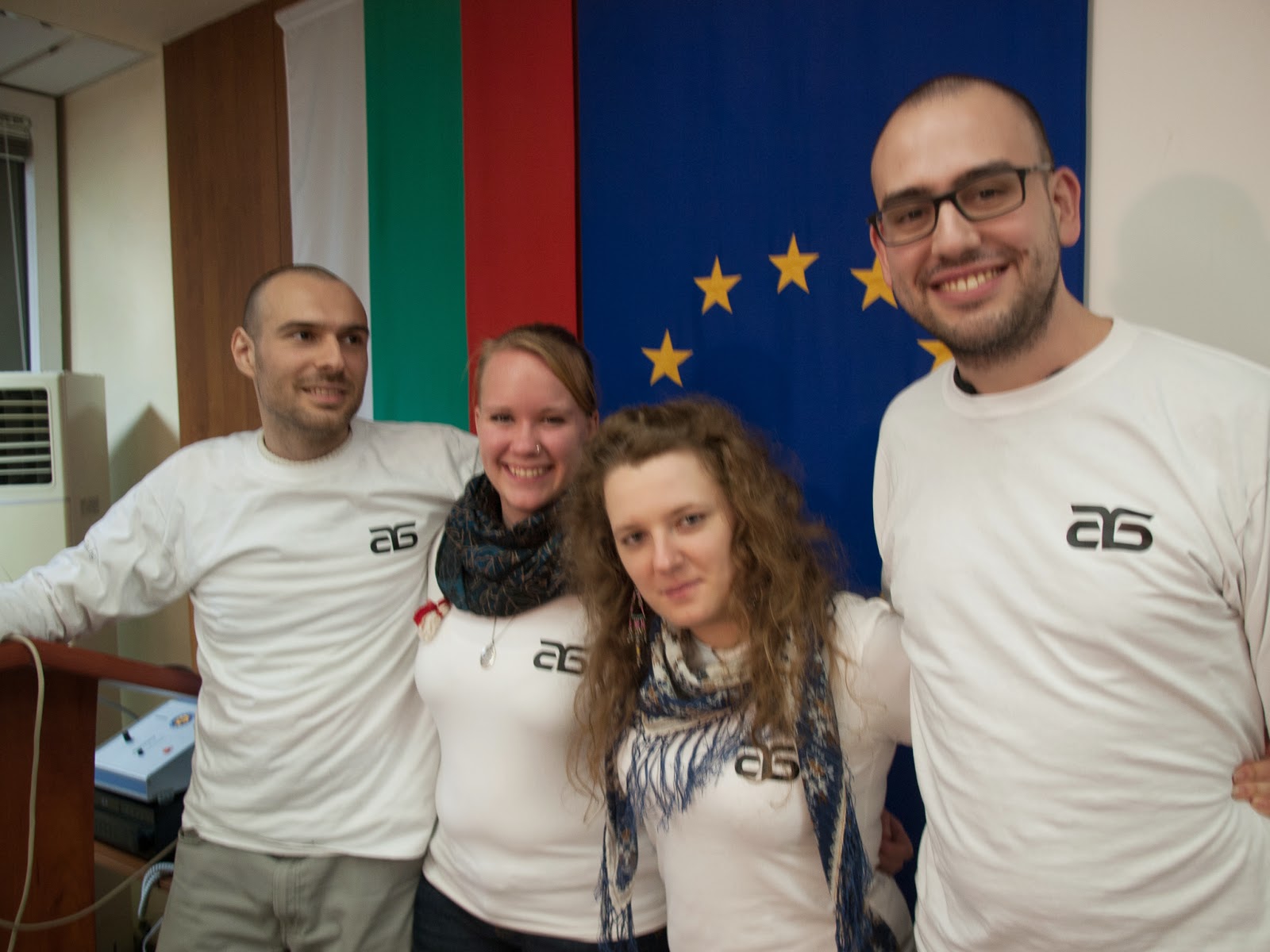
Some people thought we were actually trainers!
Who else was provided with t-shirts by their
awesome hosting organisation, eh? 🙂
Picture by Petar Markov.
Posing with the library shirts.
Picture by Petar Markov.

Agne, the volunteer who was working in the library before us, had this to say about their on-arrival last year:

All EVS volunteers have to undergo training. On 19-24 July we had our ‘on-arrival’ at the Black Sea resort of Albena, organised by the Bulgarian national agency.There
have been nearly sixty trainees in total – EVS volunteers from projects all over Bulgaria – some of them ‘on-arrival’ like us, others ‘mid-term’.

Four trainers were giving us workshops, supported by several other people from the national agency.

The training, of course, is not just about partying. A typical day included a couple of three-hour sessions, separated by a two-hour lunch break – the latter typically spent at the beach.

I was not the only one thinking the sessions were fun but intense. We did: ice-breaking games in order to get to know each others, our projects & countries of origin; psychology workshops (personality types, negotiations, conflict management); classes about practicalities of
doing an EVS (volunteerism, AXA insurance); plus creative tasks such as designing posters, shooting short films & running for quests all over Albena. […] (full post here)
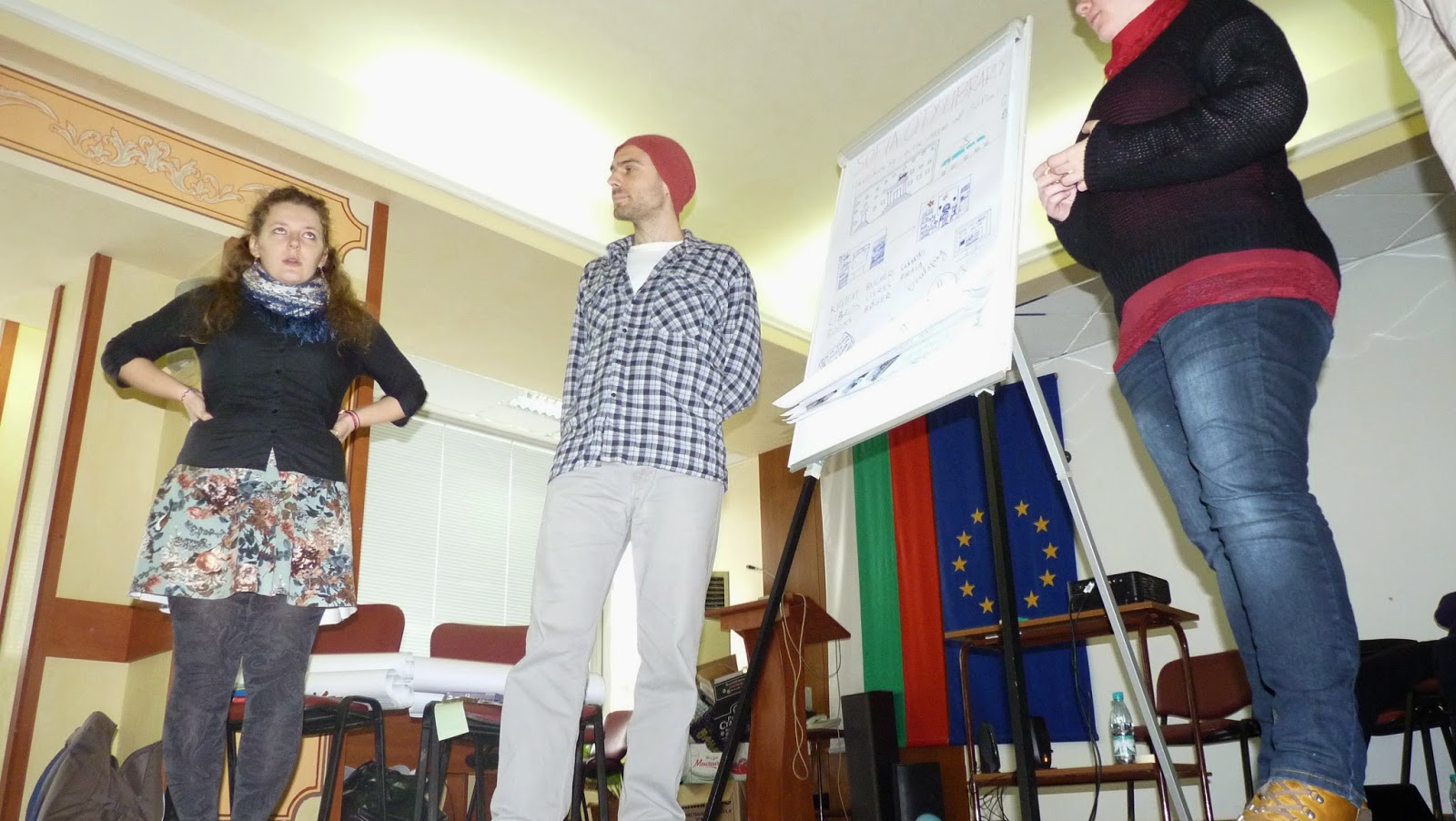

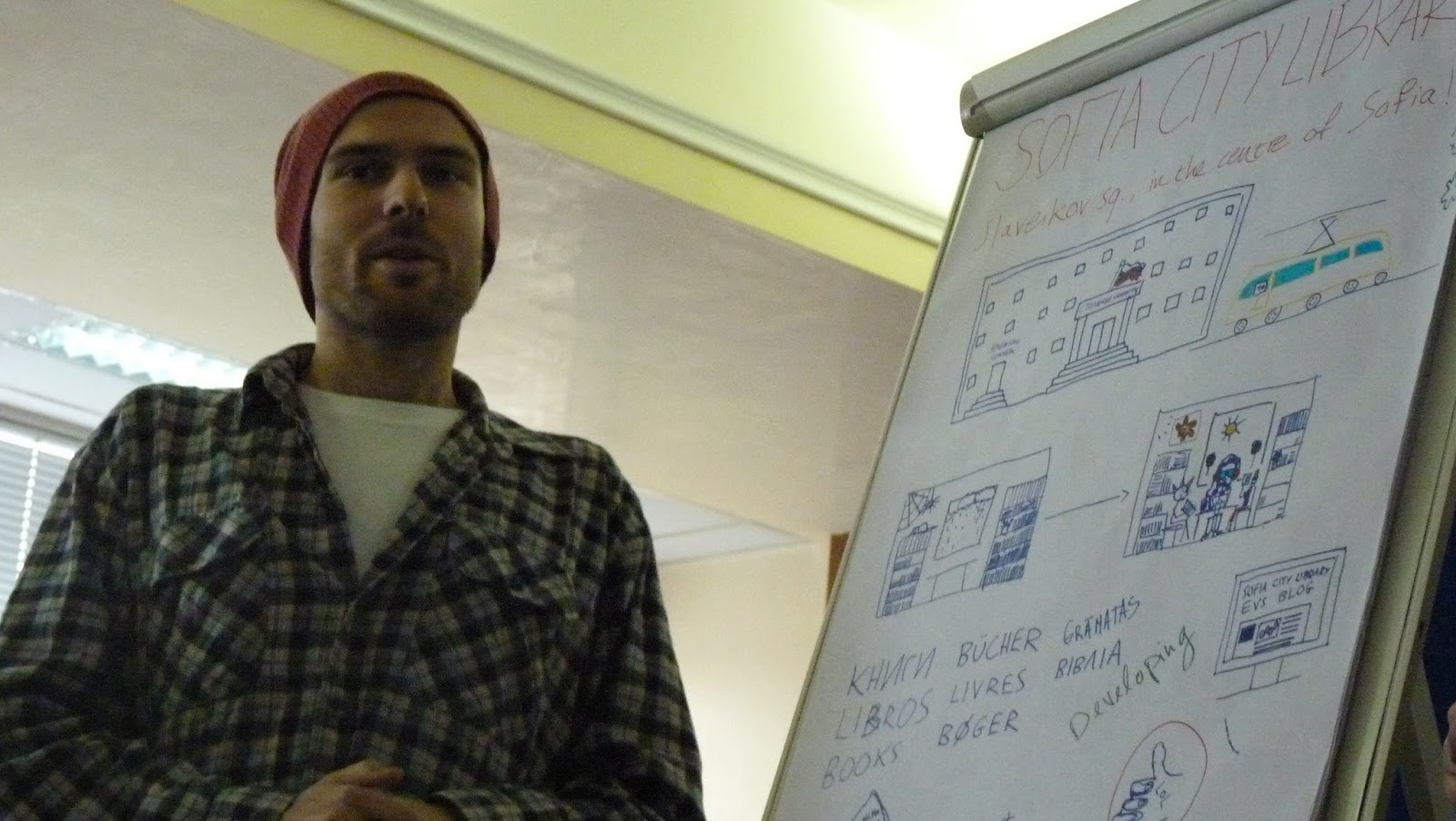
Presenting Sofia City Library and our project to the group.
Picture by Petar Markov.
Everything’s better with posters and sketches!
Picture by Petar Markov.

In our case, the place was Hisarya, (warning: musical link!), an old town well-known in Bulgaria for its hot springs. It took place from March 7th to March 13th, making it one of the longest trainings ever – lucky us! Our accommodation was Augusta Hotel, a renovated communist era hotel built close to one of those springs and using the water to fill its swimming pool, spas and saunas. Apart from the food, the experience of staying in that place was quite… interesting. Hotels always give me the impression that they exist sort of independently from the rest of civilisation, like places that belong nowhere specific. But that’s another topic entirely.
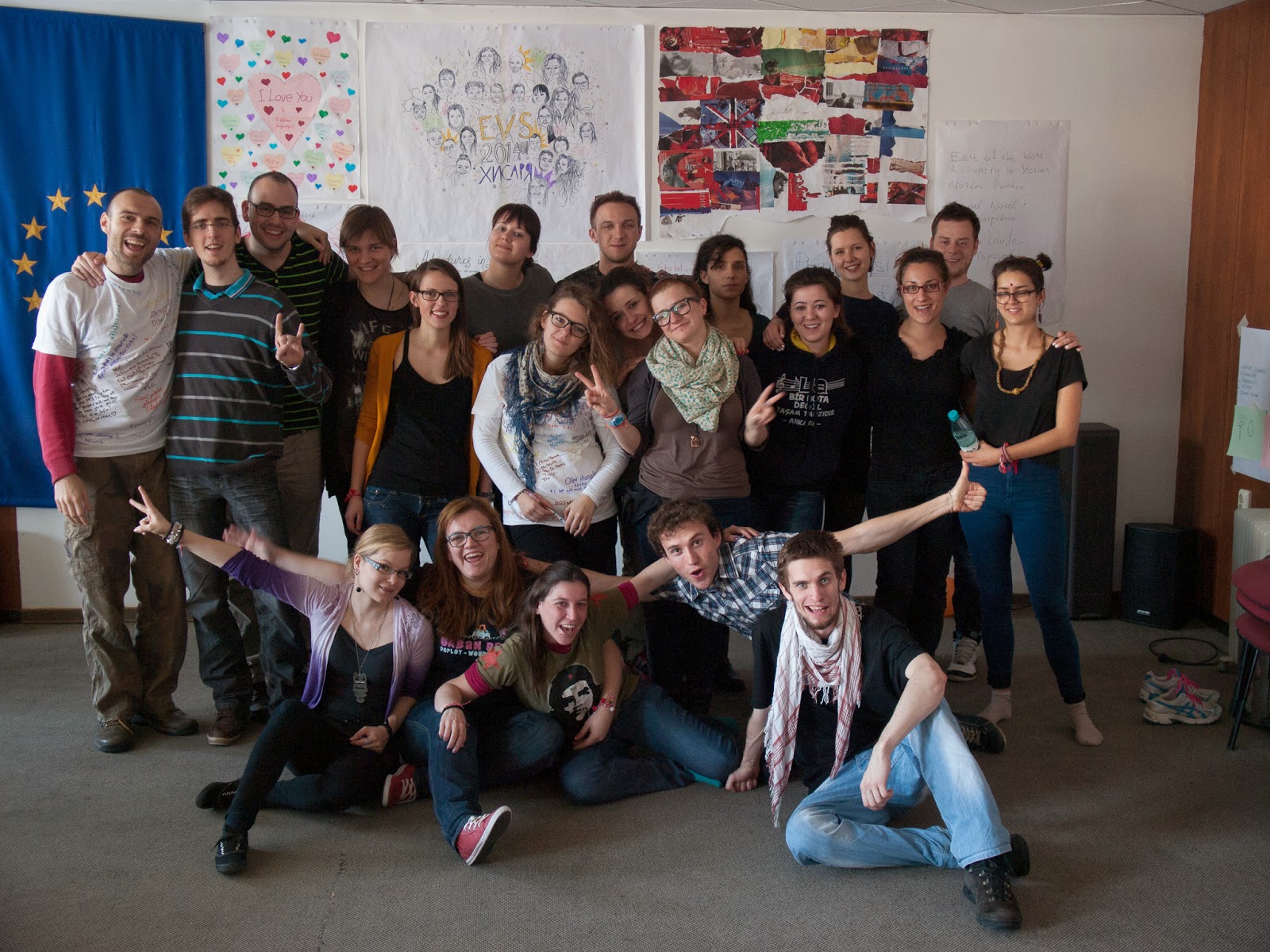
 

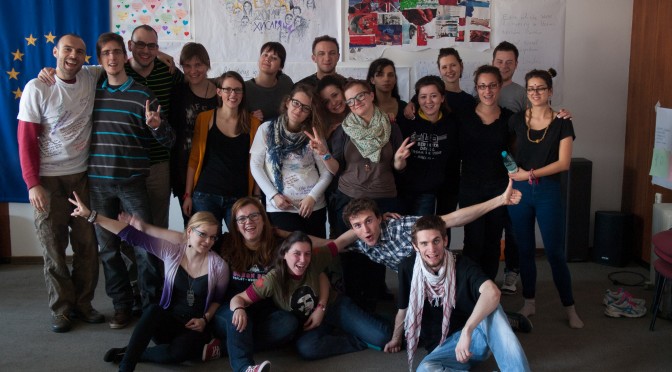
That’s us. Kuba and Ula from Poland; Anna from Austria; Florian from France; Anna, Christina and Dimitris (that’s me) from Greece; Bojan from Serbia; Miro from Slovakia; Veronika from Czech Republic; Corinne from the UK; Niina from Finland; Elena, Paula and Vicente from Spain; Rian from the Netherlands; Zanda from Latvia; Maria from Denmark; Gabriele and Rasa from Lithuania; Hilal from Turkey; Susanna from Armenia and our two trainers Nasko and Maya from Bulgaria! A truly multicultural, European group!
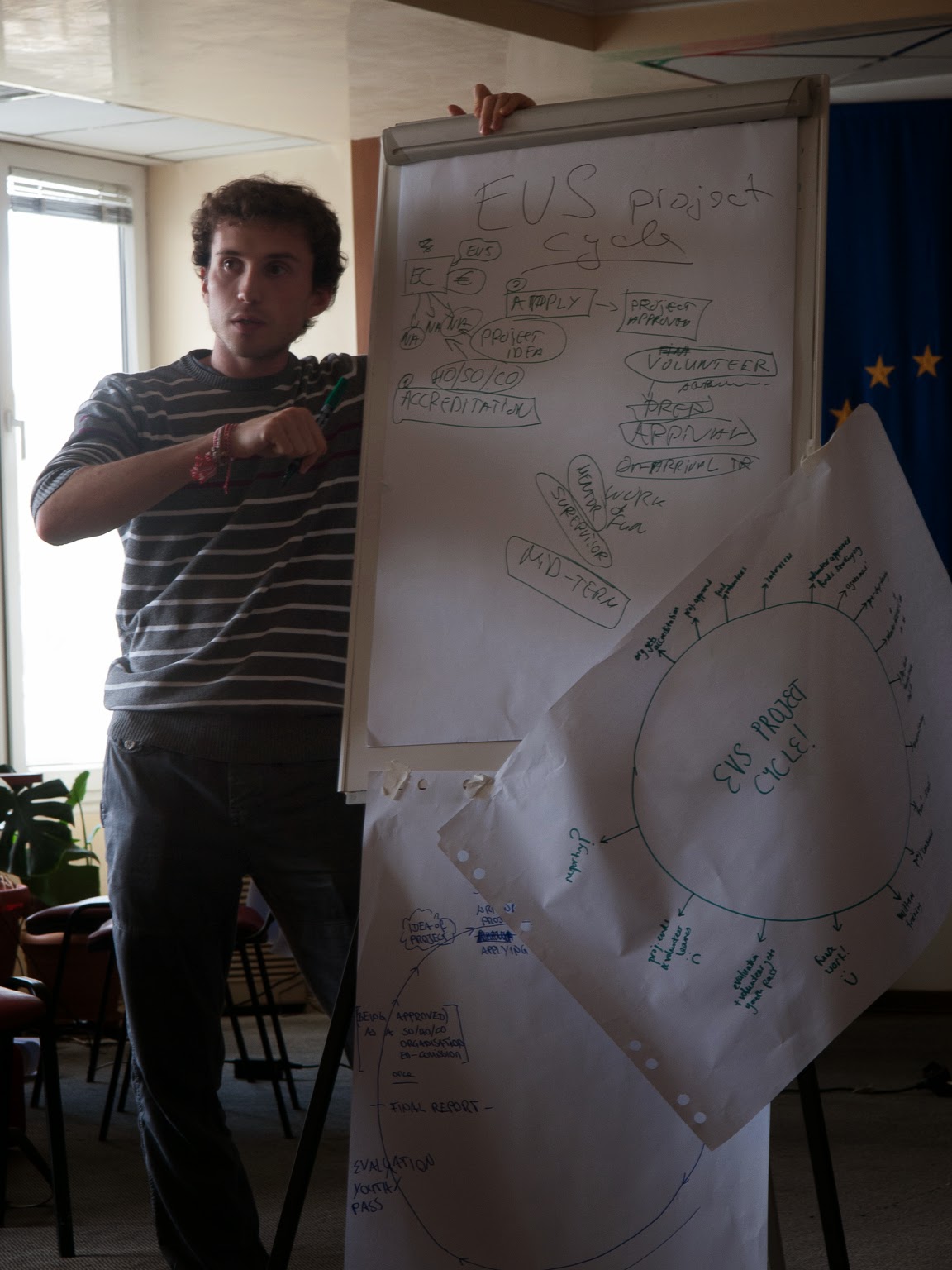
Our trainer Nasko and the EVS project cycle.
A session on intercultural communication, they said…
Picture by Petar Markov.

Meanwhile, there were another 40 or so EVSers having their mid-term training in the hall next door. The “evening activities”, in which we could all mingle together after the tough sessions of the day, were pure pandaemonium. Let’s just say that by the end, our socialising limits had been tested.

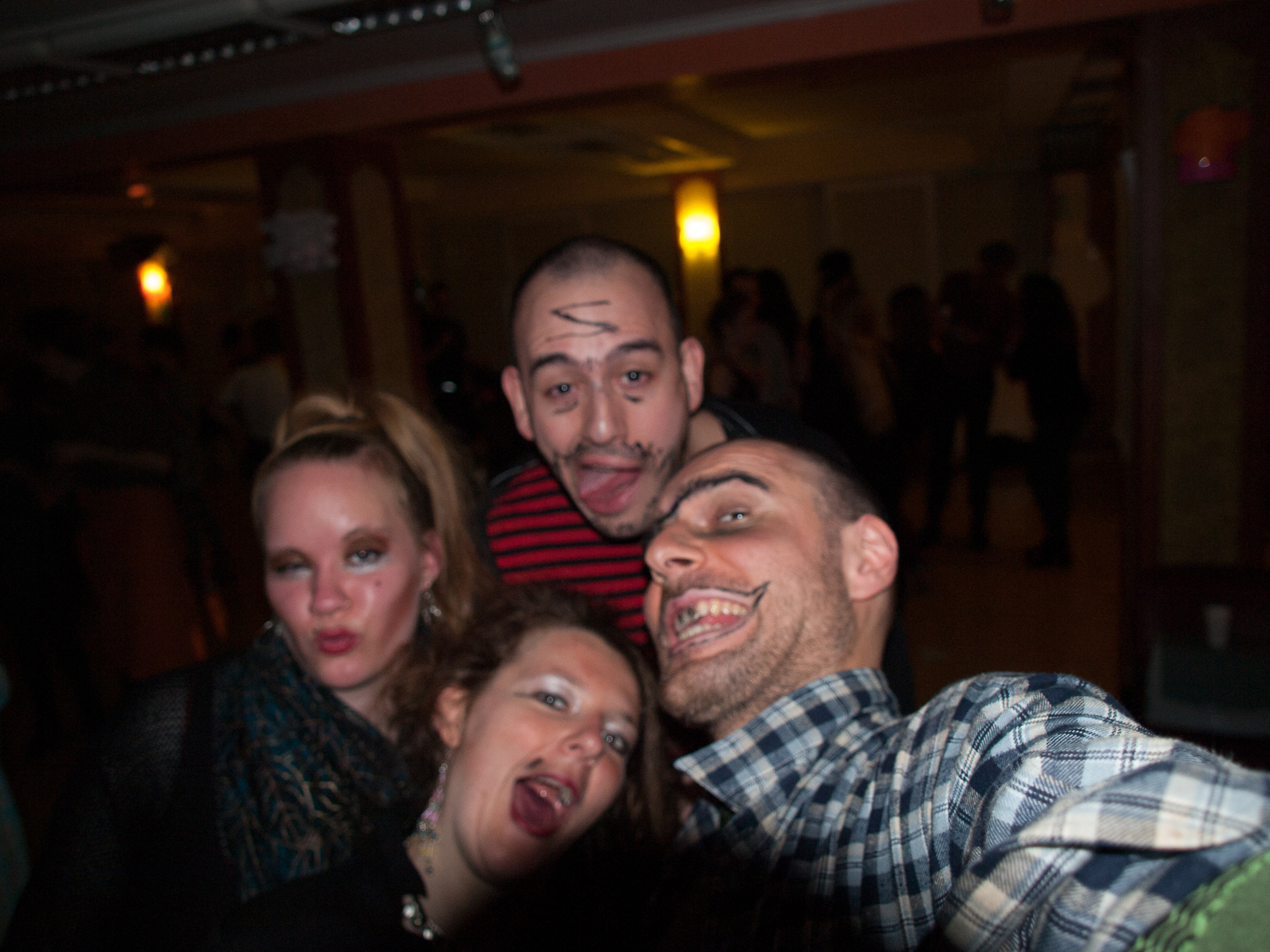
Shot from the Uglies Party the mid-terms
prepared for the on-arrivals.
Guess what the dress code was.
All bowed to the superiority of the post-it game!

I’d love to be able to convey at least part of what makes these kinds of things like youth exchanges, and in turn this training, so special, but I find it very difficult to do so: while I was thinking about writing this post, I realised that I have actually avoided writing about such experiences in the past. Being stuck together with complete strangers for a week and by the end feeling you’ve known them forever, doing things that an outsider would probably find silly or weird but you’re greatly enjoying, is not an easy feeling to explain. A friend of mine says its false intimacy. Maybe in the case of youth exchanges it mostly is: after the exchanges, I’m sad to say, it’s impossible to keep contact with everyone. Even the  people with whom you thought you could be great friends, the people you would genuinely love to keep in touch with, are in time forgotten…

This training, however, was happily different in this respect. After the final day of the training, after all the parties were had, all the games were played, all the informal education was, erm, unleashed, all the projects were presented and all the friendships made, we all knew that we would see eachother soon, or at the very least had the possibility to do so; we were all volunteers in the same country, after all…

Indeed, on the weekend after the training, more than half of the group almost magically ended up in Sofia (most of them don’t live here) and what followed was a crazy couple of days. It was also Zanda’s birthday then and everyone was invited to the party. That night we hosted 5 people in our tiny little flat! But for every person that wasn’t in Sofia for these moments, a promise to visit had already been made. A promise we can’t wait to keep.
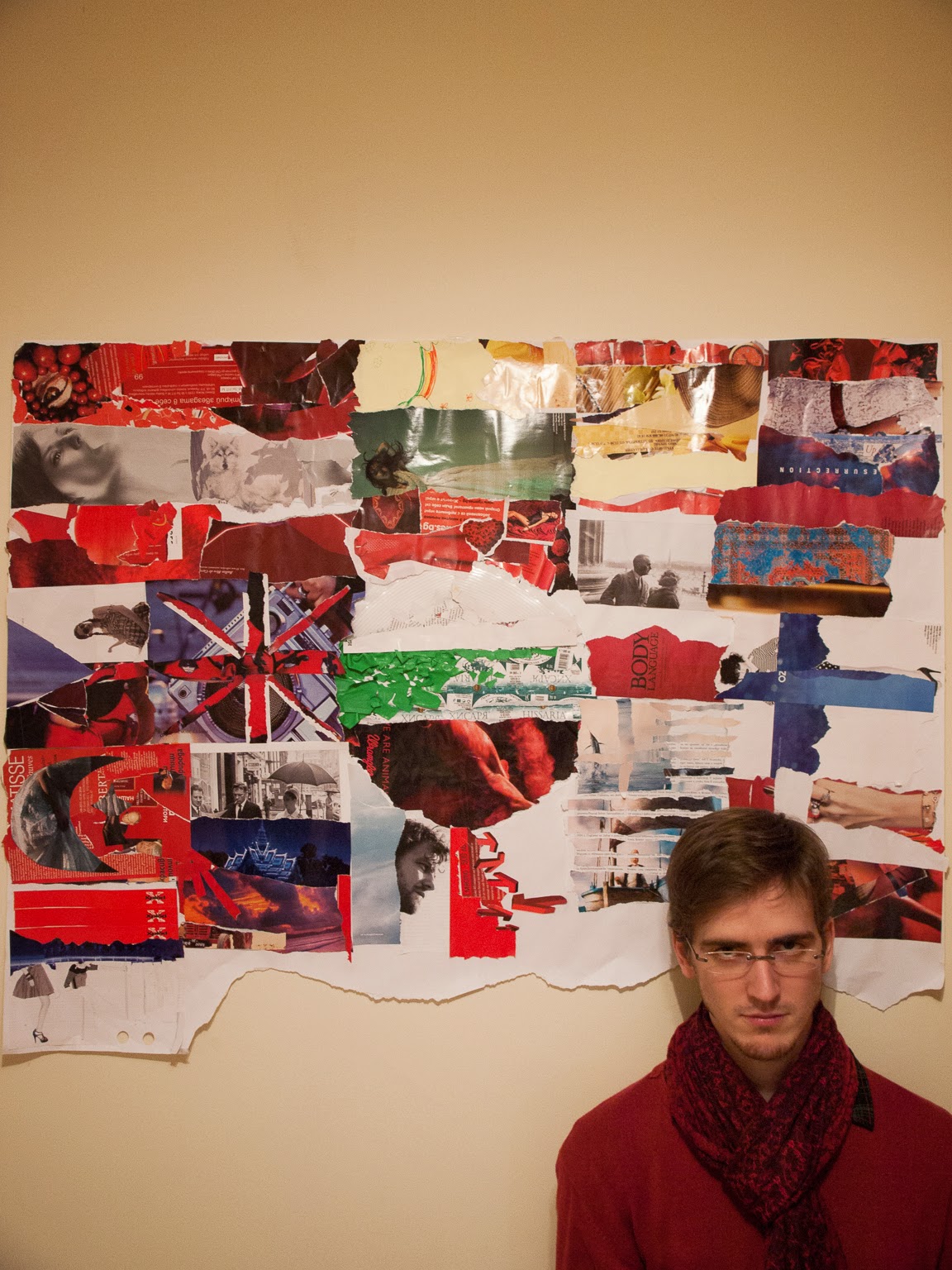
We all had a secret mission assigned to us
by the trainers in the on-arrival, which we
had to work on throught our days in Hisarya
and presented to the group on the last day.
Zanda’s was to create a collage of everyone’s
national flags. After the training we took theposter
home and this is a picture of it with Florian
in our kitchen. Proof of the impact Hisarya
had on us and our relationships in Bulgaria…

So what did we all take away with us from this experience? Personally, I had the chance to come closer to my own personal goals for the EVS as a whole, got many ideas for improving my own experience and work in the library and of course met great new people. I’d really like my friends and colleagues to include their own versions and impressions of the on-arrival, so the following space is for them.

(SPACE!)
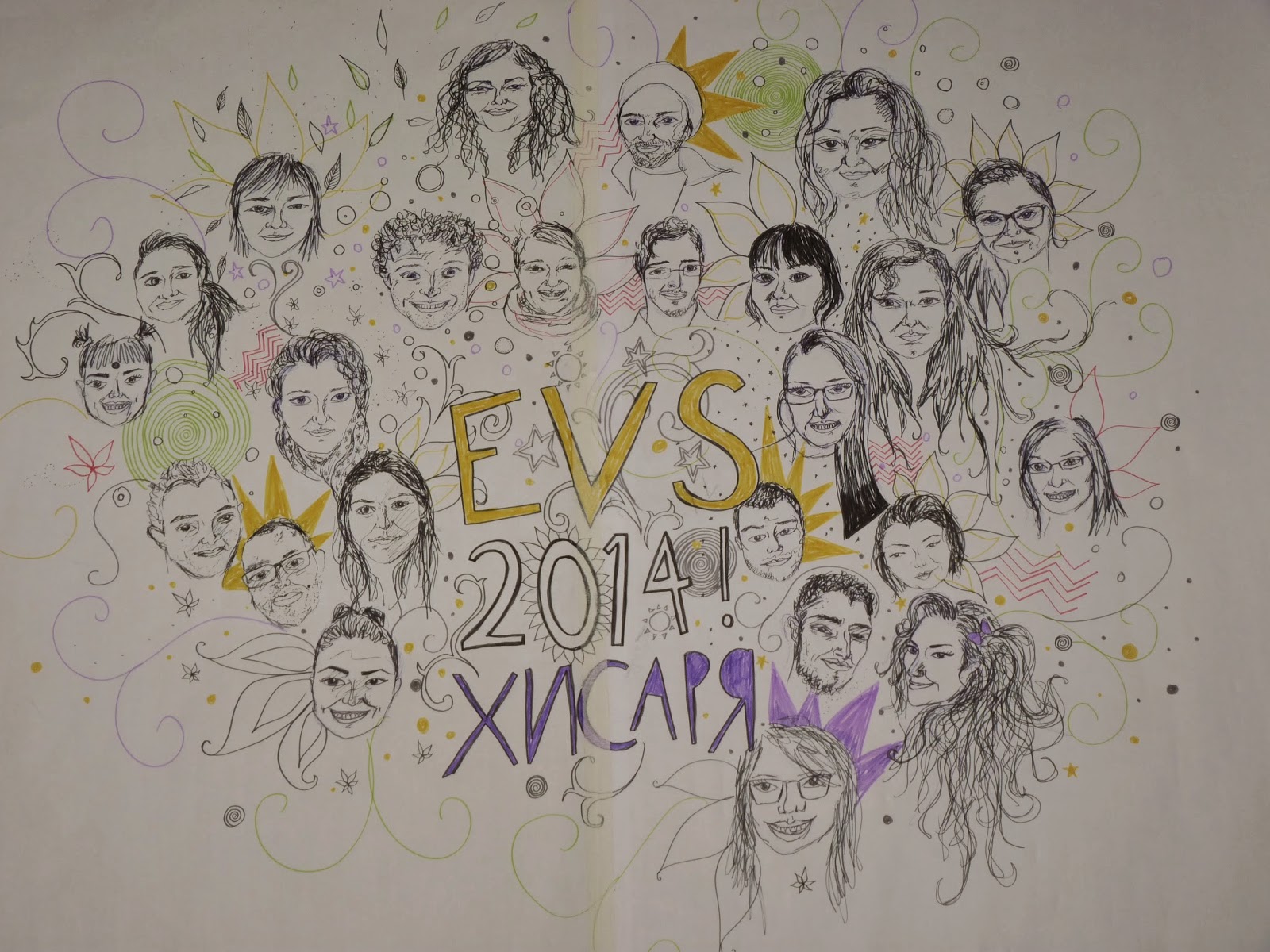
 

This one is the product of  Corinne’s secret mission.
It, too, is hanging on our kitchen wall.

Vzzzzn!

I have many internal struggles on what I should be posting and what I would rather not. As I have mentioned before, some things, if you break them down to their core, feel little more than desparate cries for attention. I get this a lot when posting pictures of myself, or when I’m even considering doing it. Really, what’s the message behind posting your picture online for everyone to see, especially through a medium like Facebook that shoves them into everyone’s faces, almost forcing them to press the like button on them? I just can’t connect this behaviour to anything people do in real life, except for things I generally despise in people. If you step back just a little bit and actually think about what you’re doing when posting a picture, the semiotics of it, what reaction you intend to evoke in your “viewers” and what psychological need you seek to fulfil in yourself, you might get it the same way I do. Then again, maybe it’s one of those things you either see or you don’t, like the fact that whenever you ride the bus or carry your stuff from the supermarket back home in a plastic bags, what you’re really using is really really old and infinitely compressed dinosaur matter.

Anyway, even though I know what I’m about to post directly contradicts all the above, I thought it would be a good introduction, if only for me to feel a little bit better with myself; “maybe I’m posting these pics, but at least I’m not shoving them in everybody’s face! I’m being discreet and allowing for people to discover it themselves! I’m so special!”

There you go then: I shaved my head and beard. It’s been more than two weeks now but the effect is still there. I did it because I’d wanted to do it for years and now, being in Sofia and having to answer to the fewest people about why I did it, seemed like the perfect opportunity. That, and I wanted to get rid of my own self-cut hair, which, the more it grew, the more it revealed the abomination of its own existence.

This picture is so horrible and scary (Mario had a fit when I put it on Skype) it would be a pure disgrace if I didn't include it.
This picture is so horrible and scary (Mario had a fit when I put it on Skype) it would have been disgraceful if I weren’t including it.

cubilone_shaved

Good Guy Greg in Hisarya. More on that coming soon.
The gang in the Uglies party.
Helllooooo ladies!
Helllooooo ladies!

A very interesting outcome of this experiment was that everyone, or almost everyone, who was telling me that I shouldn’t do it, was later telling me that it actually suits me. Says a lot about the influence others have on our decisions, doesn’t it? Most of the time, none of us are able to realise, either, how little people back their own words, but what a difference they may have already made in the lives of all involved.

Next step: what will my hair and beard look like in a month from now and what will be the difference in their length be? Further experimentation on this human body!

Review: Games People Play

Games People Play: The Psychology of Human RelationshipsGames People Play: The Psychology of Human Relationships by Eric Berne

My rating: 3 of 5 stars

Games are serious business. Opposite to what we usually identify as characteristics of games, fun and a specific goal aren’t them: the main prerequisite for their existence is a framework of rules. These rules can govern such games such as top league football, gambling or war. They can also be found as transactions following specific unspoken rules that hold a specific purpose for all parties involved played in human relationships. These are the games Games People Play is about.

I enjoyed this book. Parts of it were more geared towards therapists and psychologists rather than laypeople with an interest in “the psychology of human relationships”, such as myself. Still, Eric Berne was obviously breaking new ground with his Transactional Analysis, and even if the book is a little rough around the edges and psychology has advanced a lot since the early ’60s, Games People Play is a good starting point for those who are willing to look more deeply into this part of the field. I wonder what new games and further insight on games and transaction analysis has emerged since the writing of the book!

I would give this half a star more just for its third part, “Beyond Games”, where Eric Berne moves on to what people need in order to grow out of games and attain autonomy: awareness (where I even recognised parts mentioned by Anthony de Mello in Awareness), spontaneity and intimacy. His short descriptions for each were, as was already mentioned, quite quotable, but transcribing several pages here would have made it even less likely that this review might be read by anyone. His concluding remarks, however (“After Games, What?”)… Sorry, I couldn’t help myself!


The sombre picture presented in Parts I and II of this book, in which human life is mainly a process of filling in time until the arrival of death, or Santa Claus, with very little choice, if any of what kind of business one is going to transact during the long wait, is a commonplace but not the final answer. For certain fortunate people there is something which transcends all classifications of behaviour, and that is awareness; something which rises above the programming of the past, and that is spontaneity; and something that is more rewarding than games, and that is intimacy. But all three of these may be frightening and even perilous to the unprepared. Perhaps they are better off as they are, seeking their solutions in popular techniques of social action, such as “togetherness”. This may mean that there is no hope for the human race, but there is hope for individual members of it.

Epic final sentence is epic?

As a sidenote: I first came in contact with transactional analysis a few years back through these two excellent introductory videos [1][2] by TheraminTrees and have since wished to know more about this fascinating field. These videos summarise very well the content of this book, so if you’re interested, you can watch them, and if you want more, you can follow them up with this very book.

View all my reviews

The Ocean Is Broken

IT was the silence that made this voyage different from all of those before it.

Not the absence of sound, exactly.

The wind still whipped the sails and whistled in the rigging. The waves still sloshed against the fibreglass hull.

And there were plenty of other noises: muffled thuds and bumps and scrapes as the boat knocked against pieces of debris.

What was missing was the cries of the seabirds which, on all previous similar voyages, had surrounded the boat.

The birds were missing because the fish were missing.

[…]

North of the equator, up above New Guinea, the ocean-racers saw a big fishing boat working a reef in the distance.

“All day it was there, trawling back and forth. It was a big ship, like a mother-ship,” he said.

And all night it worked too, under bright floodlights. And in the morning Macfadyen was awoken by his crewman calling out, urgently, that the ship had launched a speedboat.

“Obviously I was worried. We were unarmed and pirates are a real worry in those waters. I thought, if these guys had weapons then we were in deep trouble.”

But they weren’t pirates, not in the conventional sense, at least. The speedboat came alongside and the Melanesian men aboard offered gifts of fruit and jars of jam and preserves.

“And they gave us five big sugar-bags full of fish,” he said.

“They were good, big fish, of all kinds. Some were fresh, but others had obviously been in the sun for a while.

“We told them there was no way we could possibly use all those fish. There were just two of us, with no real place to store or keep them. They just shrugged and told us to tip them overboard. That’s what they would have done with them anyway, they said.

“They told us that his was just a small fraction of one day’s by-catch. That they were only interested in tuna and to them, everything else was rubbish. It was all killed, all dumped. They just trawled that reef day and night and stripped it of every living thing.”

Macfadyen felt sick to his heart. That was one fishing boat among countless more working unseen beyond the horizon, many of them doing exactly the same thing.

No wonder the sea was dead. No wonder his baited lines caught nothing. There was nothing to catch.

If that sounds depressing, it only got worse.

One of the saddest articles I’ve read in a while…

Reminded me of this.


We Need To Talk About TED

“Science, philosophy and technology run on the model of American Idol – as embodied by TED talks – is a recipe for civilisational disaster”

Great article on how TED makes people hungry for innovations they’re not willing to follow through with making a reality, and how the ruling class, willingly or not, likes it this way. But TED is so cool…

I Can Now Run 8K

It is done! Almost three months after I ran my first 5K, I’m now proud to say that the previous week was my last for Gateway to 8K, and it was a success. I managed to put one foot in front of the other, with one of them always off the ground, at 149BPM, for 50 minutes straight. And I did that three times last week. My bragging rights I’m exercising before you.

But I’m not stopping here.

I’m not telling  what I have in mind, either; they say that announcing your goals is the first step to not achieving them, because part of you has already derived satisfaction from the act of sharing and from the relevant -usually positive and supportive- reactions, thus making you less determined to actively work towards them.

On the other hand, of course, “publicly” announcing your goals can be used to hold yourself accountable if you give up. Saving face, even when it’s definitely only you and your ego who’s interested in whether you make it or not,  may be a good incentive for sticking to it when the going gets tough, uncomfortable or requires certain  sacrifices.

In any case, I generally prefer the former type of incentive, if only for the free drama build-up that comes along with it! >:}

For now, my thanks go to Zapaden Park, Sveta Troitsa Park, The Cracked Podcast and Podrunner for helping, in their own way, make running for 50 minutes not as tiring or frightening as it sounded at first but something to look forward to.

EVS in Sofia City Library Blog: Bulgarian Lessons

Здравейте! Това е първът път, че пиша в български на компютъра. Уф, е много трудно с друга клавиатура…

One of the great things about EVS is that it gives you the opportunity to have proper classes for learning the language of your host country. For us, this means at least 120 study hours over a period of a few months, and right now we’ve done exactly half of that.

We have lessons on Monday and Thursday mornings in Zazy Language Centre, which is located on Vitosha Blvd right next to the Palace of Justice. Quite a central place to have lessons, right?

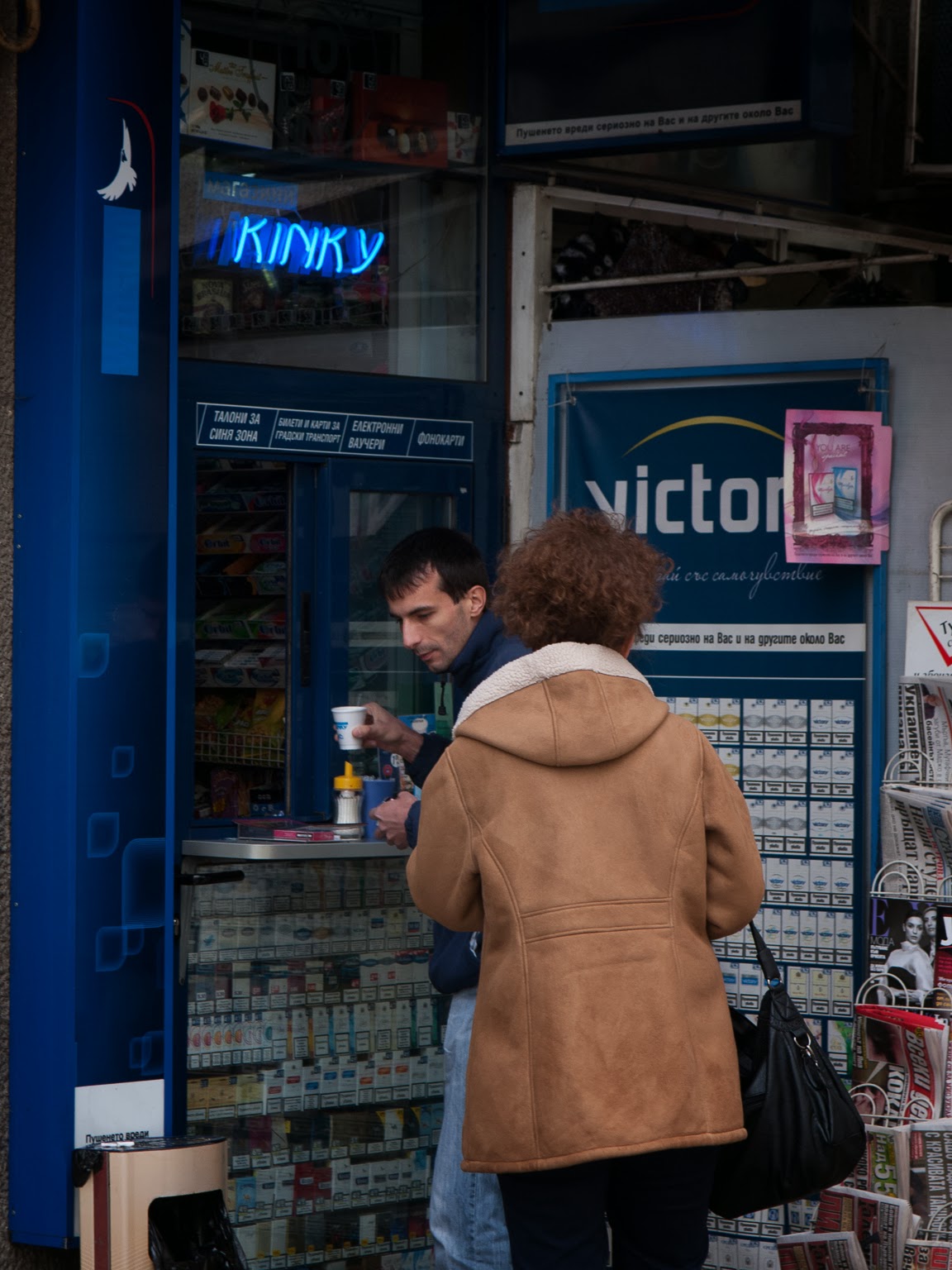
This is the entrance to the building – okay okay, I know what you’re thinking, but, if you get down to it, it’s nothing more than a photograph of a public place! The relevant jokes one can come up with from the fact that the entrance to a fetish club is the same as the entrance to where we have our language classes are rather obvious and I’ll leave them to your own sick imagination!

This is the place where we get our капучино (cappuccino) during our почивки (breaks). Did you notice that the shop is called “Kinky”? Are you noticing a mysterious pattern here? It’s not just me, right?

On a completely unrelated note, in the class itself I’m always sitting opposite this map.

I’m sorry, this has very little to do with our Bulgarian, but I just have to get it off my chest. What is this map? I’m a big geography and map nerd so bare with me, but what’s that… peninsula jutting out from the East of Finland towards Svalbard? What’s that island to the East of the Dominican Republic and Haiti, like a hydrocephalic Puerto Rico? Oh! Maybe MacMillan accidentally revealed the true location of Atlantis, what mapmakers, satellites, Google Maps etc. have been meticulously hiding for millennia. Thank you, MacMillan! The truth is out there.

Sorry for that. I just wanted to share with this little thing that continually catches my attention during the Bulgarian class.

From left to right: Oles, Hanna, Zanda, Maria,
Zlatko (our teacher), Vicente and Jeroen.
Maria from Spain was absent that day but I really
wanted to take the picture exactly then.
Don’t worry Maria, I haven’t forgot about you!

Now, this is our class. That’s us, the Library volunteers and the guys from Smart Foundation. This is the place where the magic happens. We hope that in the following half of our 120 hours we’ll learn just as much, if not more, than what we have learned already, and some day soon we’ll be ready to walk up to any baba or dyado and ask them for directions, order properly at the underground cantina next to the library with the handwritten menu with the green marker (have you seen handwritten Bulgarian??), understand what they ask us at the supermarket after we say the predictable things, which usually leaves us like deer in headlights… maybe even read some Bulgarian books! Yes, that’d be great indeed.

So, until the next attempts to actually write a post in Bulgarian, довиждане! (dovizhdane)

Review: The Electric Kool-Aid Acid Test

The Electric Kool-Aid Acid TestThe Electric Kool-Aid Acid Test by Tom Wolfe

My rating: 2 of 5 stars

You ask me what I think. Think. Neurons flashing up, millions, billions, zeros, on an array of pixels my primitive mind is not fully equipped to understand. The bright lights! “Yes! Follow them”, and they did just that, his super-ergo, his ego, the animus, the shadow self and all of the other assorted invisible, conscious, subconscious, unconscious and extended entities, tied together by the zeitgeist of the universal… Now. Nobody was better fit to understand it but him -or is that them– in that room, with that assortment of pages and memories and experiences and images, in that city that they in the South – but it wasn’t just the South – had no idea about, but who does really? And the assortment of pages, which we borrowed from the city library in Sofia, that city known for the cold but living the heat, “great day today, record highs!“- it took some time, some bits of now, of one-ness and possibilities and pages and memories and experiences and all of that, to decode and understand. But how much of it stuck? Does it even matter? And it’s not like I haven’t dipped my toes in this stuff, mind you. Beginning to understand and creating the dots on the screen this 01010010010100010 111011101010101010 in vast, immense, unfathomable bzzzzzzzz, only harnessed by the computer, the ultimate being, the judge, the jury, the executioner, the Wikileaks activist, the troll and the Spyder – it’s a superbeing unleashed by the lowly beings, that’s it. The Computer -it has to be with a capital C now, don’t you see?- will take my decoded neural flashes and make them into this text that, if people watch carefully, will see that it’s not more than it is. Which part exactly? Hah! So many interesting questions. Tell me more about how much you want to learn about the world.


This was my subjective experience of reading The Electric Kool-Aid Acid Test and beginning to write a review for it. What? You didn’t get it? Tsk. First of all: I didn’t ask you for your opinion, and much less did I write it to suit your needs; what part of “self-expression” do you find so difficult to understand? Figures: you’re one of those square types that can’t appreciate a description of an indescribable experience for what it is, aren’t you? For chrissakes, why do you have to push meaning into everything? Look how much good your meaning has done us!

OK, enough with this. Because I do value meaning, I’ll stop here. I hope, however, that this was enough for you to get the picture. You see, Tom Wolfe did something remarkable, though quite representative of his time (that’s 1968 we’re talking about here): he tried to document and tell a story without caring too much about whether the readers would understand it or whether it would make sense at all, but insisting on a specific style to prove a point. The magic of what really happened, which we’ll get to in a second, apparently gave him the impression that having his story mirror what its main actors must have experienced while actually living it, would make for a breath-taking read…

…no-no-no. Let’s put it this way. Suppose the people you wanted to document the life of, their life as seen through their eyes, were tripping on LSD for most of the duration. Bad idea, right? Well, let’s just say that this is the book that had to be written for people to learn why it’s not a good idea.

Actually, the story itself that The Electric Kool-Aid Acid Test sets out to tell is super-interesting: it’s the documentation of the events that made LSD hit the mainstream, the story of the Merry Pranksters, the absolutely bonkers mix of gang, pilgrims, troupe, nomad tribe and religion led by Ken Kesey and how they took over the US underground in the ’60s. Obnoxious and inspiring in equal measure -okay, maybe slightly more obnoxious- they travelled all over the US in that painted old school bus that turned magic and ended up becoming a symbol of their later activity, the Acid Test parties, underground events that in their own right founded a big part of what we understand today as the recreational drug, clubbing and hippie scenes.

Reading about Ken Kesey and the Merry Pranksters and the crazy things they did filled me with wonder and amazement: so that’s what happened; that’s what living in those times and following this ground-breaking movement must have felt like, being an acid-head cyberpunk 20 year before anyone had even thought of the word. They thought then, whenever they weren’t “zonked out” of their brains, that they would change the world, only they didn’t, and maybe you can understand why -and where things might have gone different- by reading this story.

It’s not Tom Wolfe’s “subjective” style that gives this effect, though. Reading something that felt like it was written while everyone involved was tripping did not make me have a clearer picture of what really took place. On the contrary: the segments of the book more akin to real journalism, the parts where Wolfe decided he could give us readers a break, were the most interesting by far for me to read. However, I can see what he was trying to do: using this kind of language he only wanted to convey the indescribable that is the altered state, the psychedelic experience. Back then it must have felt like a revolution to put it in this way, the culmination of a million different things guiding your hand and voicing the feelings and memories of an entire generation (it says so in the description of the book anyway: “They say if you remember the ’60s, you weren’t there.”) But now, one or two generations later, it all comes across as rather bad writing. He might as well have invented a new language to try to describe the inexplicable, the “you must live it!” factor. Maybe the new language would have been easier to read through, even.

This is a significant book documenting important and interesting events that distill the countercultural mythology, don’t get me wrong. If you’d like to get a feeling of the psychedelic indescribable by reading it, though, maybe it would be a better idea to watch a recently released cut of The Movie known as Magic Trip – the 16mm film Ken Kesey and the rest of the Merry Pranksters shot during their journeys with Further. I know I will.

Book borrowed from the American Corner of Sofia City Library

View all my reviews

Our Flappy Dystopia, by Mattie Brice

FlappyBird

I just came across this website among all this Flappy Bird talk and read this brilliant article by Mattie Brice, Our Flappy Dystopia.

What role does capitalism play in what is and what is not accepted as a game by the mainstream games culture? What does it take for a title to become an indie darling? What kind of segregation is at play here?

She mentions three games as examples of atypical indie titles that push the boundaries while at the same time making people sift awkwardly in their seats: dys4ia, Problem Attic and Analogue: A Hate Story. I have only played the first one and hope that the other two are as intriguing as it. I won’t say more, you’ll have to try it for yourself – it will only take you 5 minutes.

Alternate Ending as a whole is quite a find. Brice’s criticism on games and gaming culture are coming from a different and unusual place, but one that I’d definitely like to hear more often from, however: minority sexuality and social injustice.