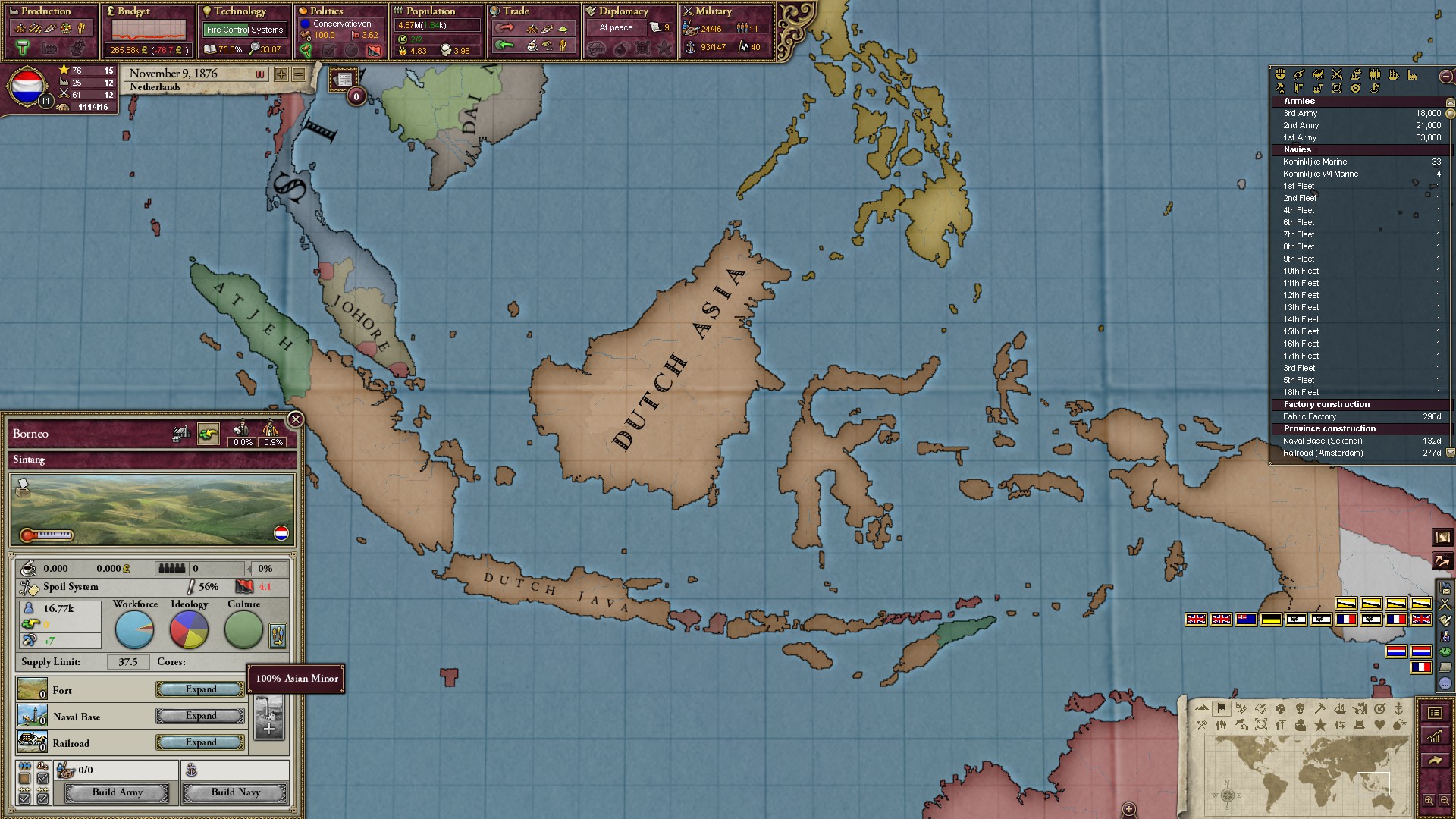
Sintang, Borneo, is only populated by immigrants from Asia Minor, which happen to be aristocrats.
I was casually browsing /r/gamedeals (yeah, as if I don’t already own enough games!), inspired by the latest Humble Bundle to look for a good price for chronically expensive Crusader Kings II plus expansions, when I stumbled upon this great offer by previously unknown to me BundleStars: Victoria 1 + 2, together with all expansions and DLC, for only €4,49! Steam keys and all! I only had vanilla Vicky 2 on GamersGate, where I received the review key, so I was itching to get it on Steam somehow. I got it and spent 6 hours non-stop trying to get the Netherlands into Club Great Eight. Alas, my warmongering and trying to take advantage of a surprisingly weak Prussia alerted the bouncers.
Wow. I just realised I’ve reviewed all of these games; that’s where the links go. The reviews are in Greek though. Here’s the one for Vicky 2 also.
In that last review, four years ago, I wrote that Vicky 2 was still a little bit unpolished. Two expansions and lots of patches later, it’s still not perfect, but it’s much more playable. If you also consider all of the mods that inevitably emerged, which I can’t comment on because I haven’t tried them yet, there’s a lot of stuff to discover.
3MA Producer Michael Hermes and GWJ editor Erik Hanson joins Rob and Tom to talk about Victoria II: Heart of Darkness. Rob is reconsidering some of his earlier, harsher views on Victoria while Tom argues that it is a towering achievement of game design that speaks to real-world politics in a way few others have ever attempted.
Victoria 2 might be a more polished gem nowadays, but it’s still notoriously difficult to understand and play, even compared to other Paradox games. Definitely one of the most complex games out there.
But don’t worry. If you buy it at this incredible discount, and I would strongly encourage you to do so if you can see yourself remotely enjoying such a game, here are a couple of videos to help you get started. Let’s play together then and carve Europe between ourselves. }:}
(It’s already been almost three months since I finished this one… just for you to get an idea of how slowly things are making the passover from my life to the ‘mension these days.)
Reading the Book of the Damned on the book-damning device.
Below you will find an assortment of highlights from The Book of the Damned pulled from the clipping file of my Kindle. Convenient, that. You can find the same super-version of the book as the one I read for free on Amazon. I’m still not sure if it’s a best-of, Charles Fort’s collected works, or what… There seems to be at least some content which doesn’t match up with the text found on his four books as found separately.
Anyway, back to the quotes:
The data of the damned. I have gone into the outer darkness of scientific and philosophical transactions and proceedings, ultra-respectable, but covered with the dust of disregard. I have descended into journalism. I have come back with the quasi-souls of lost data. They will march.
—
The power that has said to all these things that they are damned, is Dogmatic Science.
—
All sciences begin with attempts to define. Nothing ever has been defined. Because there is nothing to define. Darwin wrote The Origin of Species. He was never able to tell what he meant by a “species.” It is not possible to define. Nothing has ever been finally found out. Because there is nothing final to find out. It’s like looking for a needle that no one ever lost in a haystack that never was—
—
The novel is a challenge to vulgarization: write something that looks new to you: someone will point out that the thrice-accursed Greeks said it long ago.
—
It may be that in the whole nineteenth century no event more important than this occurred. In La Nature, 1887, and in L’Année Scientifique, 1887, this occurrence is noted. It is mentioned in one of the summer numbers of Nature, 1887. Fassig lists a paper upon it in the Annuaire de Soc. Met., 1887. Not a word of discussion. Not a subsequent mention can I find. Our own expression: What matters it how we, the French Academy, or the Salvation Army may explain? A disk of worked stone fell from the sky, at Tarbes, France, June 20, 1887.
—
My notion of astronomic accuracy: Who could not be a prize marksman, if only his hits be recorded?
—
But what would a deep-sea fish learn even if a steel plate of a wrecked vessel above him should drop and bump him on the nose? Our submergence in a sea of conventionality of almost impenetrable density. Sometimes I’m a savage who has found something on the beach of his island. Sometimes I’m a deep-sea fish with a sore nose.
Charles Fort was a trailblazer. What we call today paranormal or occult, together with all the relevant scientific investigations, in a few words what we’d expect from Mulder and Scully, to a large extent we owe to him. Here’s a guy who lived in the ’20s and researched old copies of Scientific American, Nature and other such periodicals and magazines, looking for the damned, the unexplainable, the excluded. For what good is science, if it only chooses to include to its dogma what it can explain, sweeping under the carpet all that can be used to challenge its grand theories?
Giant, village-sized wheels submerged in the middle of the ocean; periodic rains of fish, frogs in various states of decay and of a gelatinous mass of unknown origin; falling stone discs, as in the quote above; meteors; lights in the sky moving in formation (reported in the 19th century); footprints of impossible creatures; giant hailstones; cannonballs entombed in solid rock, and that’s just a sample.
Reading about these mysterious exclusions was a delight. I love everything that challenges my way of seeing the world and allows me to contemplate alternative explanations for life, the universe and everything. To be fair, some of Fort’s favourite theories were down-right bizarre, such as his insistence on imagining a realm above our own from which all the falling creatures and materials originated – what our own surface world would be, conceptually, for the “deep-sea fish with the sore nose”, as in the last extract I quoted above. The existence of such a place sounds no less ridiculous now than it did in the 1920s, but I think Fort’s point was that his arbitrary explanations were just as good as the official ones offered by the scientific dogma of the time, which our present, widely-accepted, matter-of-fact world theories of today mirror. To be sure, a part – I don’t know how significant – of the excluded, would be possible to include today, but I’m sure that many of the phenomena Fort goes through in his Book of the Damned would be just as inexplicable today as they were in the centuries past.
There are two reasons this book isn’t getting five stars from me. The first one is that it’s twice as long as I think it should have been. I felt that Fort at certain points was simply repeating himself. It’s also possible he was just saying the same thing in a different, more difficult to understand way, and this is precisely the second reason this isn’t getting five stars. Fort’s language and style was very hit or miss. To give you an idea, the quotes I’ve included in this review are some of the easiest parts to understand from the whole book. Others love it. Myself, I can’t say I hate it, but I’m not sure it’s as successful a writing technique as Fort must have hoped for it to be.
The same hit-or-miss-ness is applicable to the book as a whole. I thought it was tremendously interesting and a significant publication that should be studied further and give inspiration to present-day Charles Forts, but I don’t believe the style is for everyone. Why don’t you find out for yourself if it’s right for you, though? It’s free!
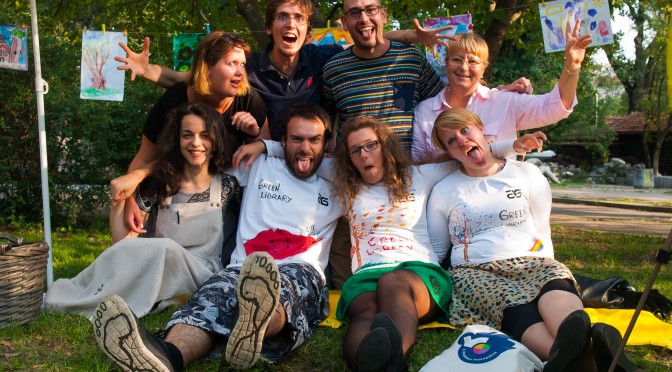
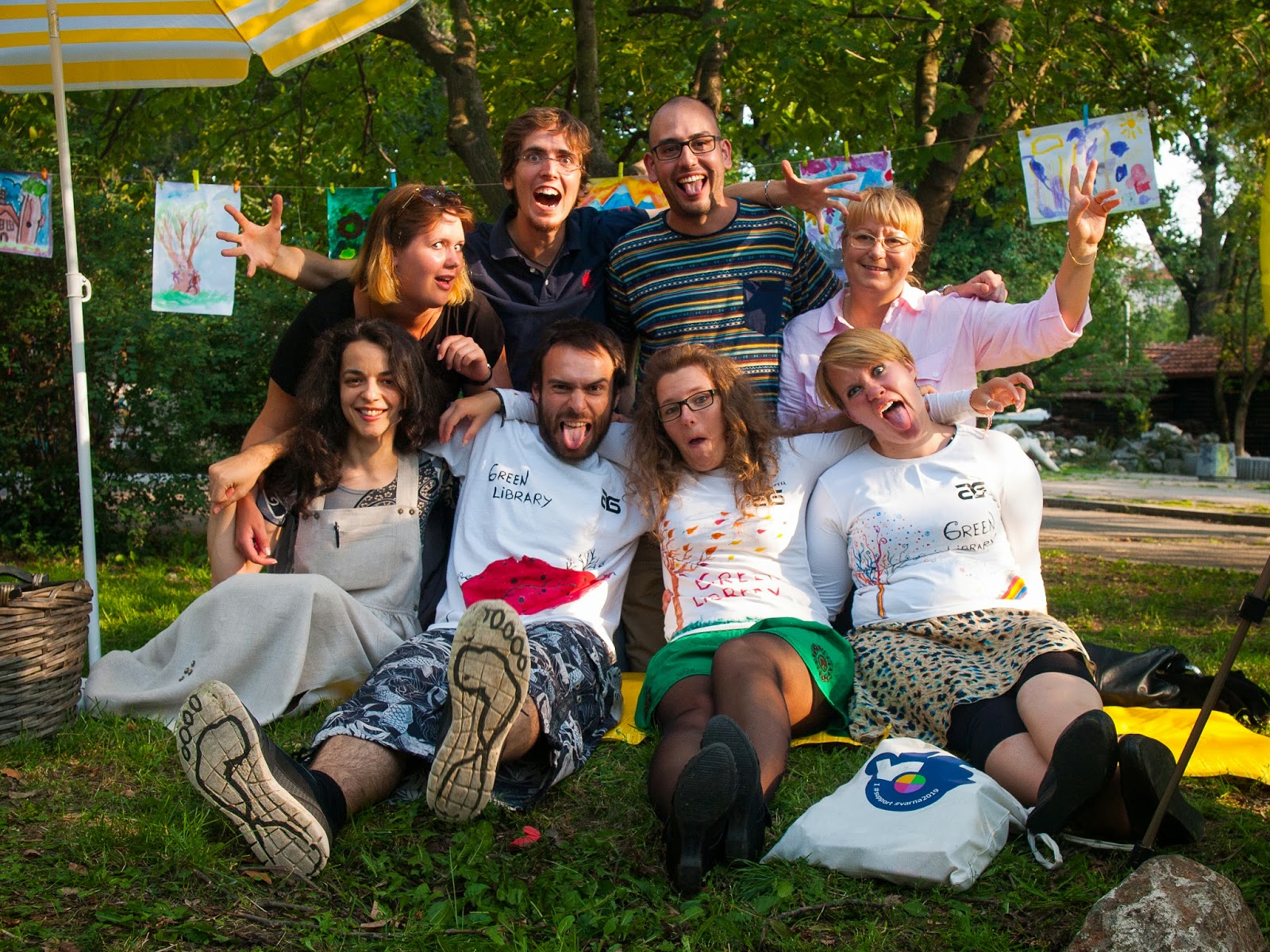
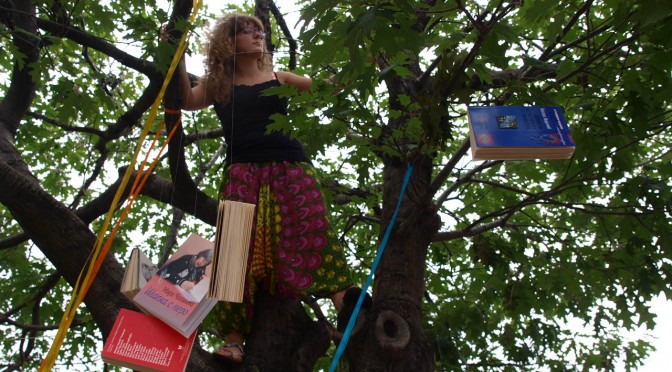
We made this video with all our love for the event that was made of love. Library’s a giving tree. Enjoy!We were also on Bulgarian National TV. Unfortunately, I can’t embed the video, so you’ll have to click on the link and watch it there. Here’s another reportage done by TV Evropa – I speak Bulgarian on that one! 😀
Again, many thanks to Zanda, Maria, Valya and Boryana. You should write something about it too, girls! Post it on the comments and I’ll make it part of the post.
First song put on my new blue Sansa Clip Zip, along with episodes from Common Sense, Three Moves Ahead and Idle Thumbs in my small attempt to compensate for abandoning my favourite podcasts in the past few months.
Let’s see if this MP3 player proves to be as good as I’ve been led to believe from trusting the people who know on the internet.
The Portuguese reading room is soon going to become the Korean reading room. For that reason, all of the books kept therein had to be moved to the Spanish reading room and section which from now on will likely be the Iberian section!
Meanwhile, we got some videos from the procedure and we thought they looked fun and representative of the good time we have in the library even when doing “manual work” like this, so I decided to up them.
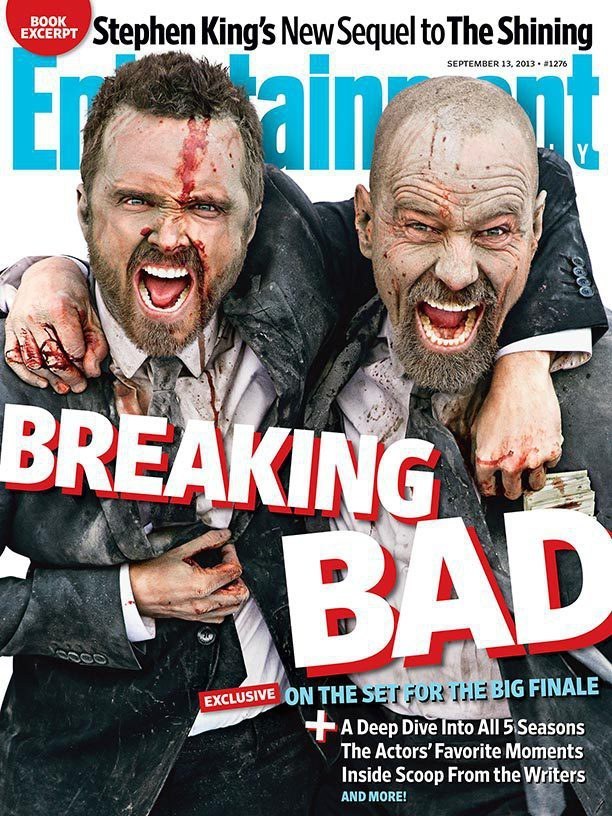
For Daphne and me, Breaking Bad has had a special meaning. We began watching the series last October. We pledged to only ever watch episodes together. I remember talking to Tomas in Capture Green in Prespes, him telling us he’s a chemical engineer and us joking about it. We were still in season 1.
As it happened, by last January, when I left for Sofia, we hadn’t even finished the third season. So in the past few months we could only watch episodes when we were either 1) physically together in the same room, whether in Sofia or in Athens, or 2) Skyping. The latter proved to be less than satisfying and too much of a hassle really – because watching Breaking Bad “together” also meant pressing play at the same time, pausing whenever the other person paused, waiting for the other person to get the episode right (my old laptop not capable of handling correctly any kind of video larger than the size a post stamp) etc. Meanwhile, Vicente, Miro and Garret all started watching it almost simultaneously and blew through it from end to end in a matter of weeks. We were still at the end of season 4 when Garret wrote this and this. Vicente overtook us somewhere around May and the beginning of season 5.
It really didn’t help that the series had its finale right before we started watching it, so we really had to be careful not to stumble upon spoilers scattered about by enthusiastic but careless watchers…
What I just wrote gave me some pause. What are the rules of spoilers? I had to go back and check one Idea Channel episode exactly on this that had caught my eye but I didn’t watch. Here:
No matter your position on the “Mitch and Greg to Emily continuum” (watch it and you’ll understand), posting something like “OMG! So-and-so DIED!” on your Facebook wall (as typically happens with the airing of each new Game of Thrones episode as well and leads people to Friends List culling) breaks every possible rule suggested. What goes through these people’s minds when they do things like this, unless they’re trolls, defeats me.
Anyway. A few days ago (on the momentous day of July 31st to be exact) we did it. We finally finished Breaking Bad. And it was good. It was heroic. We watched four episodes in a single day – can’t remember when the last time I did that was. No binge-watchers here, for better or worse… It’s amazing how many things I’ve started but never finished, if I get down to it. That I followed the whole series through, all 62 episodes of it, to the bitter(sweet?) end, hell, that alone speaks volumes when it comes to me. Sadly. Or not. I don’t know. It’s just the way I am I suppose: deriving pleasure from starting things – not bringing them to an end. For books it’s another story… but for series, or games, I am like this.
I don’t know what I can say. Explaining why things are good by dissecting them isn’t my forte at all. I can tell you such little tidbits as “I could never see it coming!”, “soooo suspenseful, so stressful!“, “the photography and direction were incredible“, “such strong characters!”, “I love Gus Fring, bitch”, “better call Saul!”, “where’s Miiiike?”, “everybody’s so fucked”, and maybe that’ll give you an idea.
I could also tell you that, unlike many other people who like to take pride in being able to figure out what will happen at the end of a given story, I’m typically quite bad at it. What I thought would happen at the end when we were watching the first few episodes had already happened by the end of season 2, so the actual seasons 4 and 5 were quite a ride through the unknown and unexpected.
Good thing I wasn’t spoiled.
For rounding off this mini-tribute, some more praise and discussion of the series.
This video was an exercise in spontaneity: we came up with the idea for it, wrote the lyrics and the music, shot it, cut it and uploaded it within 6-7 hours. Extra footage is from our first Green Library event at Lyulin, which took place last Saturday, and, apart from the rain, which spoiled our plans a little bit, it was quite successful.
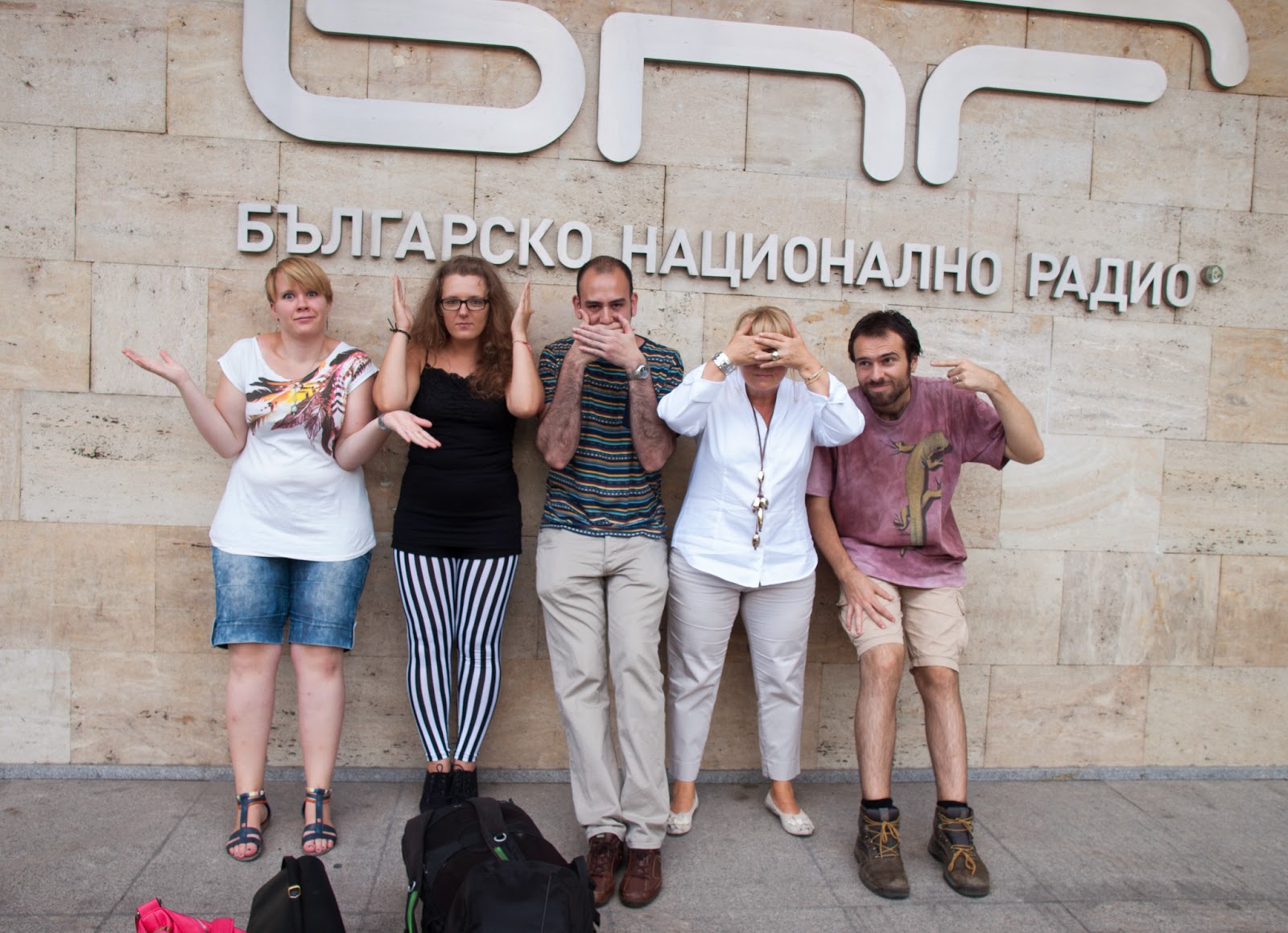
I mean, we even went to the Bulgarian National Radio for an interview. Valya, Boryana and Zanda were the ones who spoke the most, presenting our activities and inviting the listeners to our event in Lyulin, but it’s no small thing getting to speak in Bulgarian on the freakin’ national radio, if only just for 15 seconds! The people were kind enough to share the interview with us. Valya starts speaking at 0:25, Boryana at 2:00, Zanda at 4:00, Maria at 4:20, Vicente at 6:55 and myself at 07:10. Here it is:
Many thanks to Maria and Zanda, who had the original idea, and everyone else who helped make this a reality. See you next Saturday!
I had been looking for this song for ages. Then uTorrent offered me Gramatik’s whole discography for free when I installed it and I had the opportunity to look through Gramatik’s entire back catalogue to finally find this gem. I knew it was Gramatik! Traunquilo. A solid piece of advice I could definitely use these days in particular. If my goal is to go with the flow, these days I feel like a leaf stuck on a rock in the middle of the river. July will be a tough month.