Recently I started noticing that this song from Steven’s latest album sounds like happy (OK, happier) Blackfield. Then I managed to pinpoint this impression more precisely:
Category: English
BLACKFIELD
Dammit. Blackfield’s made it back to my playlists. Missed you guys, it’s been a while (not you, Steven ♥)
Should I post some Blackfield here?
Fuck it. Go the fuck ahead. Post some fucking Blackfield.
But which song?
Feh. Post the whole fucking album. It captures the whole gamut of feelings. Those feelings.
Seriously. There must be plenty of bands that put their name on their songs and albums, but surely nothing comes close to Blackfied- Blackfield – Blackfield. Skip to 03:49 if you really must.
TRAIN OF FREE
Inspired by the song at the end of last post.
GROW CREATIVE YOUTH EXCHANGE 6TH-17TH OCTOBER, RIJEKA, CROATIA
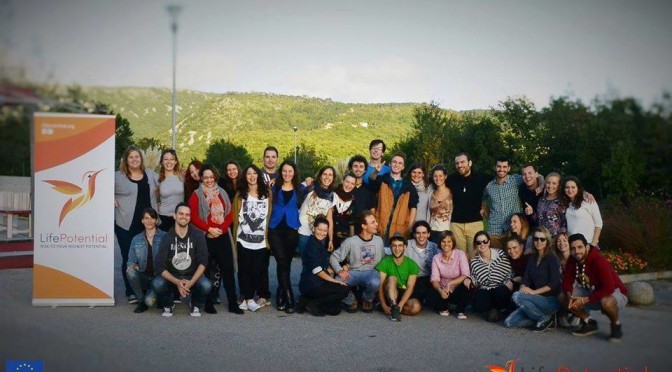
Once again, I feel so relieved someone else did the more descriptive, general write-up for me. *dons sunglasses, throws self in hammock set up between chestnut trees*
It happened! Grow Creative in Rijeka
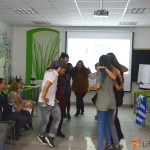
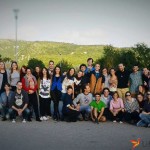
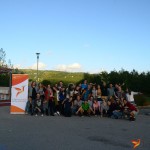
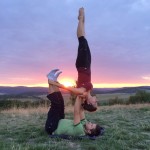
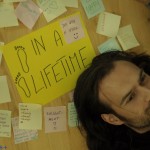
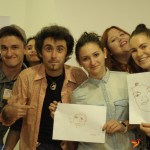
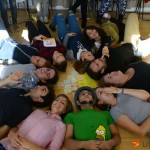
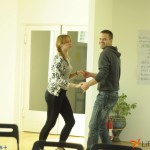
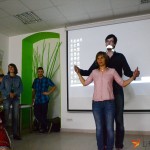
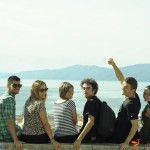
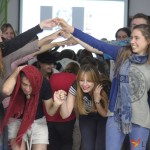
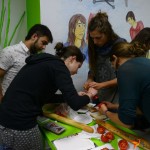
The youth exchange we were preparing and waiting so much took place in Rijeka on 6-17 October. 30 young curious and talented people from Croatia, Bulgaria, Czech Republic, Greece, and Spain came to learn, act and have fun. And they did it!
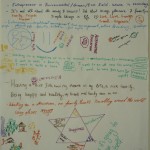
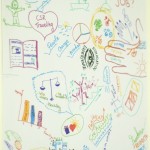
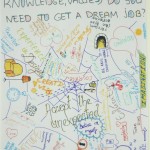
The aim of Grow Creative is to empower young people to be successful and creative, to find their dream jobs. The participants went deep inside to discover their inspirations and values, and they flew high to share their dreams and plans for the future. They worked hard morning through evening to enhance their problem-solving and communication skills, and even tried themselves as entrepreneurs.
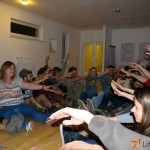
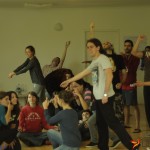
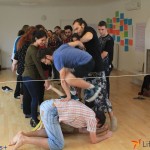
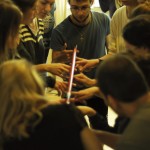
Many things were happening every day. We learned some NLP and coaching tools, and had many interactive presentations and discussions.We played different roles,and had new exercises and energizers every day.Many activities were created and led by the participants. Thank you for sharing your experiences with us!
We used many different ways of communication, mingling and cooperation. Our mutual understanding and unity reached ones of its highest peaks during the cultural evening. Each country presented the best of its culture: artistic performances, traditional dances, national habits,and delicious cuisine. And we saw creativity boosting! Altogether it made the event so intense, exciting and remarkable.
All these 11 days Dharma Hostel was our home, sweet home. It provided us with beautiful Adriatic Sea view, comfortable rooms, vegetarian food, yoga classes in the morning, and very friendly and hospitable staff.
We also went out to explore Rijeka, and it was a lot of fun with some unexpected discoveries and surprises.
Sometimes the things were not easy, and we needed support of each other. Sometimes we went out of our comfort zones, but always came back to our Cozy Area. And eventually team work proved that everything is possible, we got impressive results and had a great time together!
Thank you to all the participants for making this exchange so special and inspirational. We hope to see you again and wish you beautiful adventures ahead.
And here we go, ready to take off with new projects and ideas!












My remarks:
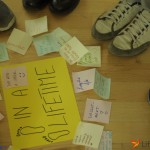
Everybody set challenges for themselves during the training. Mine was “move and function from love, not fear”, inspired/taken/stolen from the phenomenal book I read a few months ago already, Conversations With God
All in all, I found this exchange very motivating and inspirational. I had the distinct feeling it was just what I needed, the right thing at the right moment together with the right people etc. The Greek team, the Spanish guys, the Czechs, the Croatians and the EVSers working with them, българите…There was a lot of synergy in the group and we bonded faster and stronger than I expected—though this feeling is a typical high you get during youth exchanges and one that unfortunately doesn’t last that long once they’re over. I’m still trying to figure out whether that feeling is artificial compared to “normal” intimacy with people. Maybe it’s just our society and way of life that have taken so much out of plain old human connection.
Anyway, I felt great clarity when I was envisioning my future and describing my present situation, my place in life and where I wanted to be. I felt amazingly relaxed letting out the words but not caring whether they would come to pass, or even if anybody would understand; I realised that whatever happens will be right, if only I focus on what I want my life’s meaning to be, so to myself as to the people I meet on the way. No, scratch that actually. No matter what you do, no matter what happens, everything will be alright. Including, I don’t know, the destruction of the Earth itself.
Writing these lines brought Man’s Search for Meaning to mind…
One such moment of touching core meaning was was when I gave a half-hour workshop on the Enneagram to the group and it went super smoothly. Almost nobody had heard of it before, and it resonated with a greater part of the group than I had expected. It felt right and in fact I received positive reinforcement in everything I attempted to do differently, as related to coaching (a big point of focus of Grow Creative in general) and working with people.
The feedback I get during exchanges is so different from what I’m used to hearing in “everyday life” that I must admit I find it addictive, scary and thought-provoking in equal degrees. Many people in Grow Creative found me and what I had to bring to the team—the Enneagram, the games, my honest sharing, my attempts to be an active listener and competent talker—“inspiring.” I was just making a point to be moving from love, not fear. And it made everything so much easier, so much prettier. Opening up and, as cliché as it sounds, letting go—that is, letting go of who you want others to think you are—felt good in a very pure sense.
That said, I can’t recall the last time anybody in Greece called me inspiring. Apparently, I project quite different personalities to the people I’ve known for a long time, who have certain expectations of me, and to those I’ve just met. Quite contrary to what used to be the case, I’ve become much more eager to meet and get to know new people, and find it increasingly harder keeping up with older friends, acquaintances, relatives… I like to think it’s because of expectations and that it’s impossible to make everyone happy, in other words, “best just to avoid having to deal with expectations entirely”... But could it be another sign of my underlying need for infinite novelty? Well, in Grow Creative, for the first time in a long while, I felt as if I took the first step in getting over that too. But maybe not, either, and it’s not very important, really.
A big thanks to the Life Potential team who scored big with their first exchange.
In the vain of Kwa Nhingirikiri (totally had to double-take on that), Timing, Happy…
REVIEW: THE CONSOLATIONS OF PHILOSOPHY
 The Consolations of Philosophy by Alain de Botton
My rating: 5 of 5 stars
This was the first link of the chain of thoughts and instants that led me to reading this book by philosopher Alain de Botton.
This is one of those rare applied philosophy books that pose the question peculiarly left untouched by many contemporary professionals in the field of how one can use philosophy and philosophical ideas, some of them quite old, to make their life better and happier. To me, and by all appearances to Mr. de Botton as well, simplicity is a virtue of itself, and there is very little value to be found in ideas that need several tomes of derivative works and commentary to be decoded.
Consolations of Philosophy book has none of that. You could call it anti-philosophy, in an almost ying-yang sense. Mr. de Botton took six problems commonly faced by some—I’m tempted to say all— people and asked “what would Socrates, Seneca, Montaigne, Schopenhauer and Nietzsche do?”
It worked. It gave me a sense that these famous thinkers basically had the same insecurities I do, and it did so amazingly eloquently, informatively and most of all intelligibly. His train of thought was clear and I felt invited to hop on for the ride from the get-go.
The sad part is that most of the original works actually are the boring, long-winded books we have come to connect philosophy with. I suppose that makes Mr. de Botton a real bearer of ideas, a cultural translator or interpreter. Whatever he is, his job is extremely valuable and that was awesome.
Excerpts and some comments:
Consolation for Unpopularity, Socrates:
“It would be as naïve to hold that unpopularity is synonymous with truth as to believe that it is synonymous with error. The validity of an idea of action is determined not by whether it is widely believed or widely reviled but by whether it obeys the rules of logic.”
…for the next time I have to confront insulting sworn carnivores, skeptics, dogmatists—anyone with a closed mind, really. Or for expressing an opinion that is over-looked in group situations.
Consolation for Not Having Enough Money, Epicurus:
“At the heart of Epicureanism is the thought that we are as bad as intuitively answering “What will make me happy?” as “What will make me healthy?” The answer which most rapidly comes to mind is liable to be as faulty. [i.e.—it’s not money!]
… for the next time I stress over not getting a review done, playing a game, or having little income.
Consolation for Frustration, Seneca:
if most philosophers feel no need to write like this [clearly], it is because they trust that, so long as argument is logical, the style in which it is presented to the reader will not determine its effectiveness. Seneca believed in a different picture of the mind. Arguments are like eels: however logical, they may slip from the mind’s weak grasp unless fixed there by imagery and style. We need metaphors to derive a sense of what cannot be seen or touched, or else we will forget.
… for the next time I worry about not being precise and finding it difficult to speak succinctly. Speak intelligibly if you want to be memorable!
Consolation for inadequacy, Montaigne:
But writing with simplicity requires courage, for there is a danger that one will be overlooked, dismissed as simpleminded by those with a tenacious belief that impassable prose is a hallmark of intelligence. So strong is this bias, Montaigne wondered whether the majority of university scholar would have appreciated Socrates, a man they professed to revere about all others, if he had approached them in their own towns, devoid of the prestige of Plato’s dialogues, in his dirty cloak, speaking in plain language. […] It is striking how much more seriously we are likely to be taken after we have been dead a few centuries. Statements which might be acceptable when they issue from the quills of ancient authors are likely to attract ridicule when expressed by contemporaries.
…for when I feel stupid, doubt my own arguments and thoughts, because they do not come complete with fancy words (thanks Dad!)
Consolation for a Broken Heart, Schopenhauer:
We should in time learn to forgive our rejectors. The break-up was not their choice. In every clumsy attempt by one person to inform another that they need more space or time, that they are reluctant to commit or are afraid of intimacy, the rejector is striving to intellectualize an essentially unconscious negative verdict formulated by the will-to-life. Their reason may have had an appreciation of our qualities, their will-to-life did not and told them so in a way that brooked no argument—by draining them of sexual interest in us. If they were seduced away by people less intelligent than we are, we should not condemn them for shallowness. We should remember, as Schopenhauer explains, that: What is looked for in marriage is not intellectual entertainment, but the procreation of children.
…for the next time I am, uh, rejected by a woman for not inspiring her to have children with me?
Consolation for Difficulties, Nietzsche:
In the eyes of people who are seeing us for the first time… usually we are nothing more than a single individual trait which leaps to the eye and determines the whole impression we make. Thus the gentlest and most reasonable of men can, if he wears a large moustache… usually be seen as no more than the appurtenance of a large moustache, that is to say a military type, easily angered and occasionally violent — and as such he will be treated. […] The secret for harvesting from existence the greatest fruitfulness and the greatest enjoyment is—to live dangerously! Build your cities on the slopes of Vesuvius!”
…for the next time I make base judgments about others. Remember that everybody’s the centre of their own universe, the protagonists of their own movie, and ultimately the only actors on their destiny that really matter. Be subjective about others (allow them to be subjective about themselves) and objective about yourself, that is allow seeing yourself as others see you, the good and the bad, and be mindful of it. Keep in mind that most people will like you or dislike you no matter what, so go with it. Move and function from love, not fear.
See? Just writing this review inspired me to put down some of my own values and philosophical musings. Can there be any greater compliment for this book and Alain de Botton?
JODOROWSKY’S STAR WARS
The new trailer for Star Wars VII came out just yesterday and it’s racked up more than 30 million views already. Not bad eh?
Here it is for good measure.
I used to really, really love Star Wars. It was about the same time I really, really loved Harry Potter and Pokemon, give or take a few years. Today, as a more or less adult man, in the same way I will still enjoy but find it difficult to really get into Harry Potter and Pokemon for prolonged periods of time—even for nostalgia’s sake—, I cannot really get Star Wars the same way I used to anymore. It feels comfortable, it feels familiar and easy, but comfortable and familiar is not necessarily what I need or want. Of course I’ll enjoy the movies anytime (I had a blast re-watching A New Hope on VHS a couple of months back—seriously, give let’s VHS a chance— and listening to Verily, A New Hope immediately thereafter) and I’m sure that the SW fan lying dormant somewhere inside of me just waiting to be Awakened will duly do so two months from now, hand-in-hand with the rest of geekkind and the very Force itself, apparently. That much is a given.
But sometimes I do wonder what the world would look like without Star Wars. There, I said it.
Jodorowsky’s Dune. Here’s a link to the full movie. I can’t recommend it enough. Watched it on the train from Belgrade to Thessaloniki. The thumbnail with ole Alejandro sticking his tongue out doesn’t do it justice—or maybe it does. Depends on you.
Imagine a world where there was no Star Wars yet, no original sci-fi blockbuster. Imagine a world where Moebius, Pink Floyd, H.R. Geiger, Salvador Dalí, Mick Jagger, Orson Welles and others had all been gathered together by pioneering film-maker Alejandro Jodorowsky with the ambition to create a film that would change the world. A film to “simulate an LSD trip” and change young minds, redefine what was possible for cinema at large visually and thematically. A movie that would play the same technical and cultural role Star Wars played for us, just taking us down a completely different road. A more spiritual and artistic road if you will.
Even though it got as close to production as a film can possibly get without actually making it to the other side, Jodorowsky’s Dune indeed was never shot because of financing troubles: basically nobody in Hollywood possessed balls big enough and the right shade of gold to support the astronomical $15 million budget and all the associated risk. I don’t blame them really.
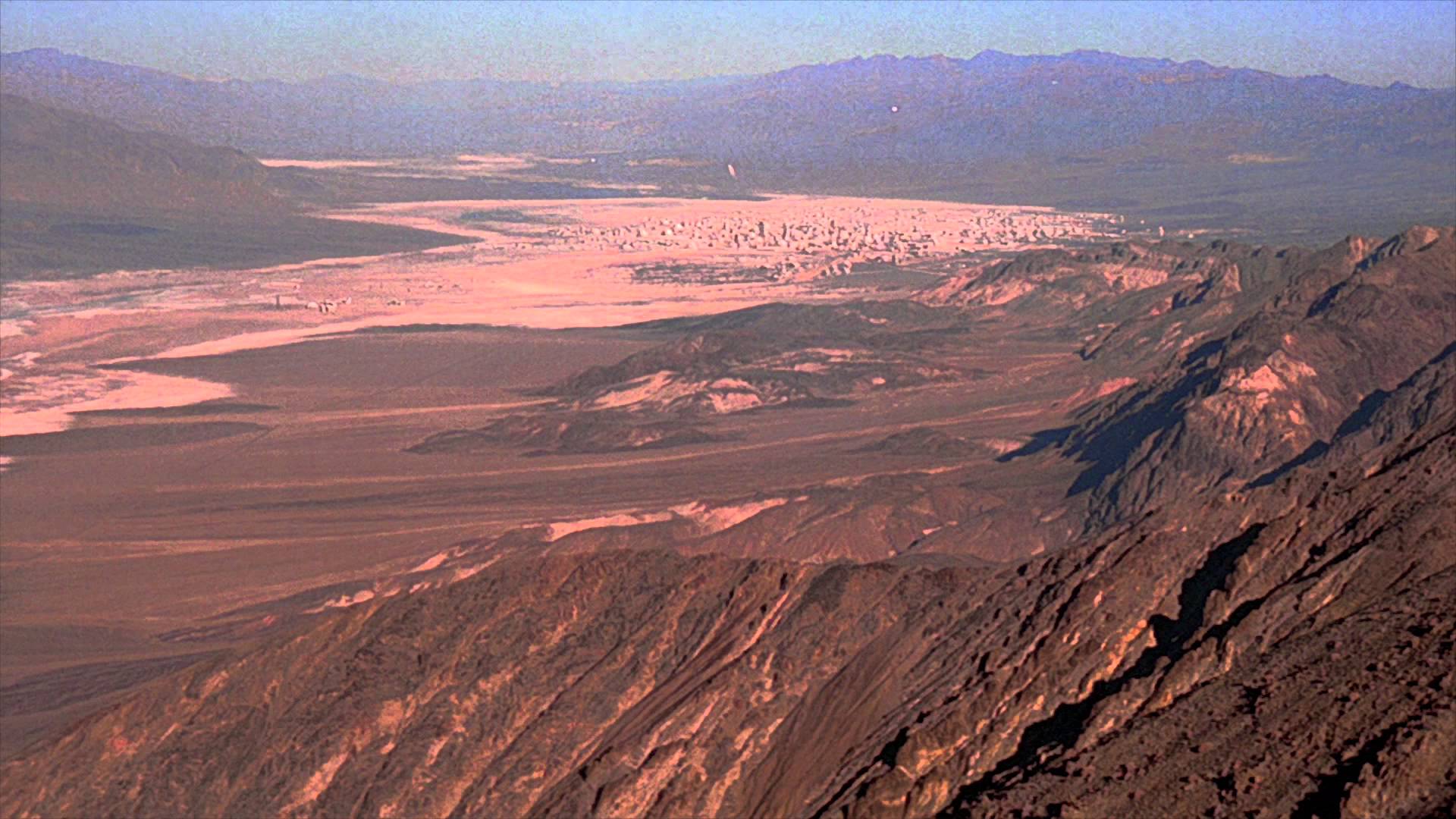
Think about it though. Star Wars is great, of course, we all love it, but it’s true that as a film it doesn’t exactly have any kind of message, it’s just a superbly made fairy tale with a generic fairy tale good vs evil plot. In fact it has grown into a marketing and merchandising monstrosity, especially in the last five years or so where you can’t throw a rock without having the rock come complete inside a Darth Vader helmet or better yet have it transform inside your hand into an overpriced Lego brick.
What if our Star Wars had been Dune? The documentary above draws all the parallels, ultimately how this spectre of a movie influenced Star Wars itself as well as other significant films in ways we’d never suspect—another reason I would encourage you to watch it. But get this: the universe where Jodorowsky’s Dune was made is the universe where not only Star Wars would have been completely different, if it had been made at all, but also one where we’d never have seen Alien or Blade Runner.
Would you rather stay in our universe with Star Wars, Blade Runner and Alien, or move to one where Jodorowsky’s Dune had been as successful as Star Wars in ours and had spawned all kinds of stories and ever genres we had never thought possible? If you believe that life imitates art, it would definitely be an interesting universe to experience in a broader sense. Would Muslims be seen under a different light? Would psychedelics or ecology play a more important role in pop culture or even make people vaguely more environmentally-conscious? Will we ever be able to traverse parallel universes and find out for ourselves?
If you enjoyed going down this mental path, I would recommend reading Replay, the book that inspired Groundhog Day, but basically spanning the 26 years between 1963 and 1989 instead of just 24 hours. There is a film in it too that gets big instead of Star Wars and changes the world.
REVIEW: MOONWALKING WITH EINSTEIN: THE ART AND SCIENCE OF REMEMBERING EVERYTHING
 Moonwalking with Einstein: The Art and Science of Remembering Everything by Joshua Foer
My rating: 4 of 5 stars
Guy wants to write a book about Memory championships and the field of competitive memorising; becomes USA memory champion. Guy is Joshua Foer, brother of Jonathan Safran Foer of Eating Animals and Everything Is Illuminated fame.
I’m happy to say that with this book, Joshua did what few other people have managed to do: he escaped his brother’s shadow. I recognise him now as a separate author of his own worth; even though they obviously have a lot of things in common which subtly influence their writing, most obviously their Jewish-American upbringing, the fact that he’s Jonathan’s brother comes as more of an afterthought.
To get to the gist: if Eating Animals was the book that turned me into a vegetarian, or if you’re more willing to discuss the matter, a selective omnivore, Moonwalking with Einstein (I couldn’t for the life of me remember this book’s title, until it just clicked, and the fact that it clicked, clicked) made me realise how memory is an art form that can be trained, not really a talent, unless you’re one of the (very) few savants that exist out there whose existence remains quite a mystery. This is valuable information that contradicts most commonly held beliefs about what memory is and how it works.
If I had a cent for each time someone has told that their memory just isn’t good enough as an excuse for not remembering my name, an appointment, a date, a birthday, something—the fact that Google is never farther than a few movements away certainly doesn’t help—I’d probably have enough money to treat myself to a small beer. They, we, just aren’t interested. Even really smart people can’t seem to figure out how their minds work best, and school systems the world over are forcing deadly disingenuous rote memorisation down child and adolescent throats. It’s amazing how we have managed to make the entire educational system a failure the way we have, given the fact that children and adolescents have a much more impressionable memory than adults, which could be used much more intuitively. Just think of all the random things—not taught at school—that you remember from your early years. Such untapped potential!
Talking about untapped potential, what seriously annoyed me while reading the book were its protagonists, namely various memory champions that have made their life’s point memorising strings of random numbers and cards. I know I might be completely missing the point here, but what I would do with such a skill as having a wealth of memory palaces in my mental possession and the ability to use them would be something more, I don’t know—useful? Interesting? Unless they’ve already memorised all that and just decided to use their skill to get some money and recognition. Perhaps. Anyway, it does look like the Art of Memory has moved a long way from way back when it was utilised for reciting speeches, epic poems and the like by heart. Let’s just be happy that in this world of memory externalisation it has been preserved at all.
If you enjoyed this book, or think you could, I would recommend the segment on memory from Derren Brown’s Tricks of the Mind.
BLOOD SPACE METASTASIS
Last night was the now famous supermoon eclipse. I woke up early to go outside and have a look. Quickly, like a lot of Greeks, my enthusiasm was quenched because of the cloudy sky. These September nights have been warm but cloudy and rainy. Switching from a Mediterranean climate to a tropical one? Check. At least it’s better than turning into Sahara, I suppose.
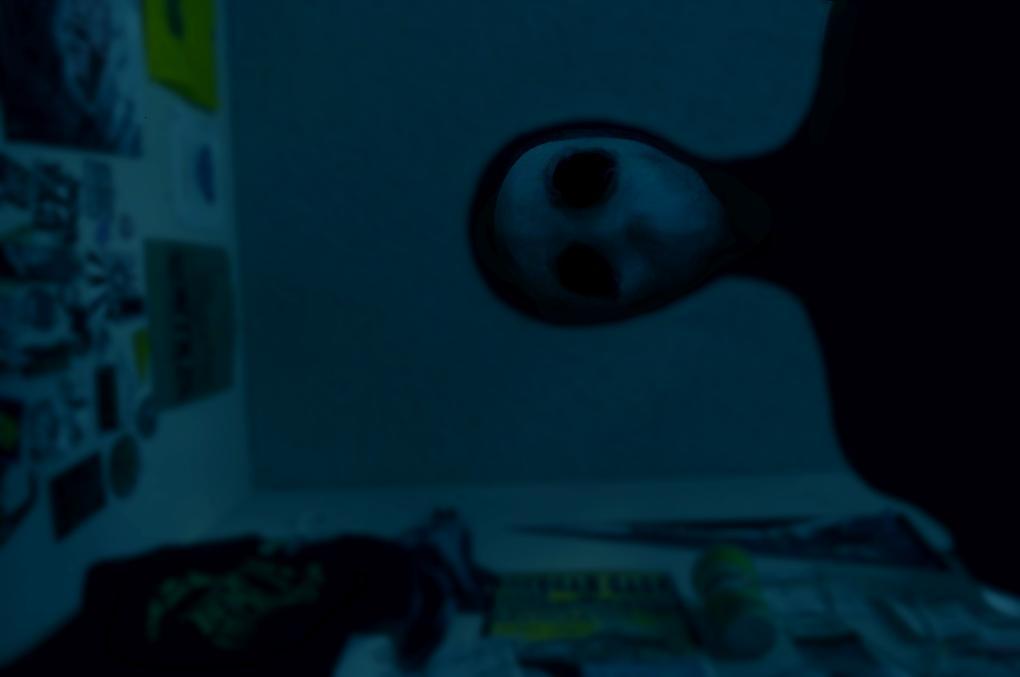
To my credit, I didn’t immediately give up, either. I sat there for 40 minutes or so, reading and underlining my morning pages from earlier in 2015. Alas, the clouds won that hopeless staring contest. I went back to bed and thought it would be a good idea taking advantage of waking up that early to take a shot at entering a WILD. Instead, I was welcomed with a bout of the worst sleep paralysis I can recall: when my body fell asleep, my consciousness didn’t, and I had hallucinations of a person walking in the apartment, into my room and around my bed. It was pitch black, so the hallucination was consistent, in that I couldn’t see him/her/it, only hear the footsteps. I had to endure this while unable to move any part of my body apart from my eyelids and their contents. All the while, the blood moon was setting behind the cloud cover. During sleep paralysis, no-one can hear you scream. You can’t scream….
Take a deep breath.
It could have been me who took this .gif. It’s a consoling thought.
Nevertheless, for all its photogenic glory, it has to be said that September 28th 2015 will not be remembered for its supermoon eclipse. It will go down as a small footnote in history that on the day NASA announced they found flowing water on Mars there had been a supermoon lunar eclipse less than twelve hours prior. It is a veritable milestone that would have me leaping for joy—if I was any proper kind of science/sci-fi/astronomy nerd to begin with. Instead, all I can think of, perhaps especially after almost half a year of constantly dealing with water as a human right and the current global state of affairs, is how we should be sorting out our shit on Earth first before starting to even think about colonizing other worlds.
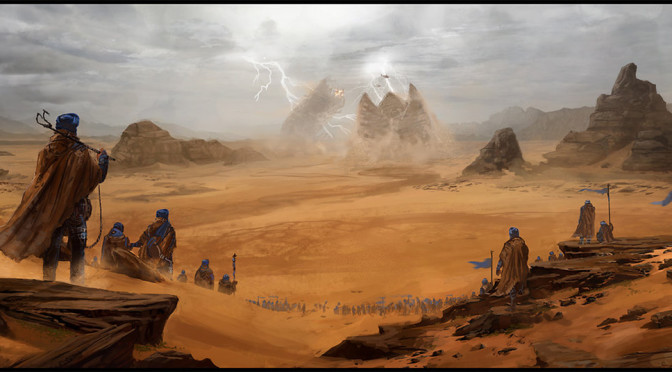
Don’t get me wrong, I too get terribly annoyed when other people generally show this kind of flamboyant lack of interest in the vastness of the Universe and the amazing advances in our apparent knowledge of the world. It’s usually such people who shun video games because they’re capitalist toys and refuse to see how they can work wonderfully to promote education or cultural awareness. Similarly, they show open contempt for science fiction as a genre, no matter how eye-opening, poetic or important it might be. They’re not interested to know that Dune, for example, was one of the first books bar none to speak about ecology and sustainability when it was published 50 years ago. No, it’s science fiction. “We have real problems on Earth. Sci-fi is for comfortable middle-class white nerds”, they say, or seem to imply. My very own father told me off when I tried to explain to him the virtues of The Dispossessed. As I was saying, under normal circumstances I get borderline offended by these reactions; at this very moment, I can sort of see where they’re coming from.
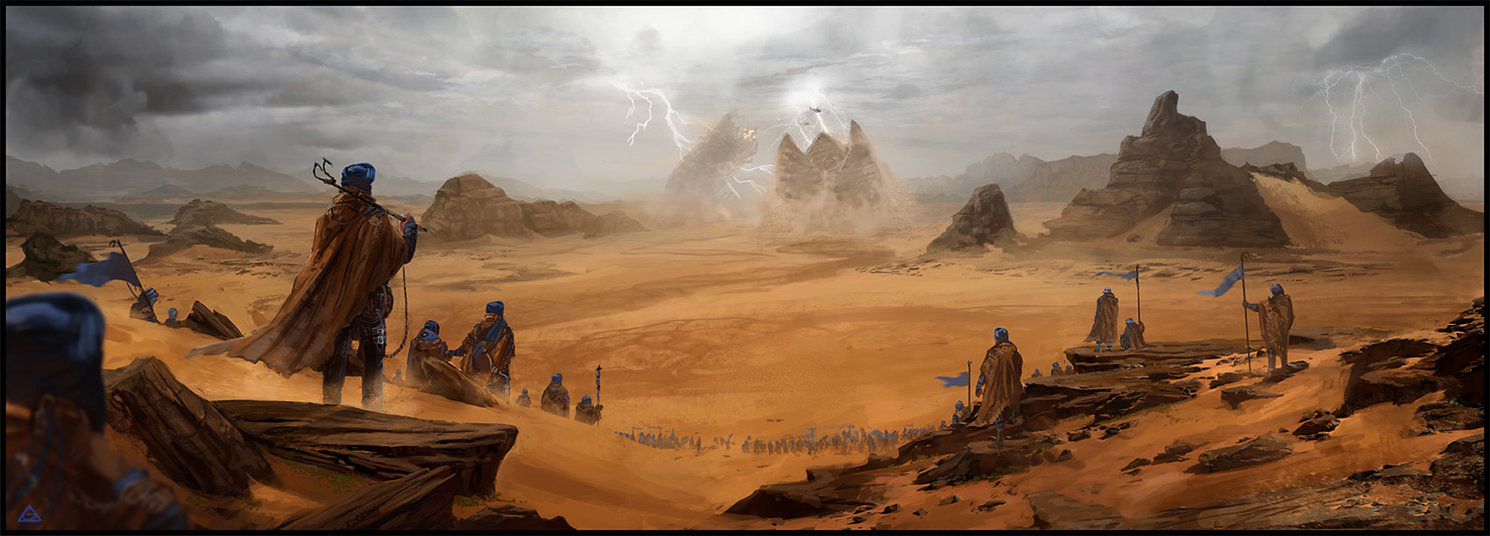
A lot of the excitement surrounding the discovery of flowing water on Mars has to do with the fantasy of modernity, the wet dream of boundless progress, the Promethean achievement of humankind founding an extraterrestrial colony. While science fiction wouldn’t have you believe it, especially with the likes of Interstellar framing the popular imagination, we’re far, far from thinking about humanity as a separate entity from our home planet. There’s no reason to believe that without Earth we could survive for any length of time. I don’t think we would want to, either. But we’re obviously not taking care of our planet as one would take care of their home. In fact, we couldn’t do much worse if we were actively trying to destroy it.
Colonising Mars as our last hope for survival after we’ve made Earth unfit for humans and broad swaths of other types of life, too, is not something I’m going to support. We’ve been making our bed, we should be honourable enough to sleep in it too—once and for all, if it comes to that. If we can’t live as part of the great ecosystem, we don’t deserve to survive. I would use the cancer analogy, namely that us out-surviving the Earth would be like cancer cells out-surviving the cancer patient who died because of them, but on second thought the analogy wouldn’t be exactly right, as it’s not really possible to kill the Earth the same way a human can die of cancer. Still, if not kill it, we just might see our Earth wither away into a wasteland where it will take many thousands or millions of years for new forms of life to take advantage of the mess we’ll have left behind—if we don’t end up like Venus, that is.

I know you might say that some ideas born out of past science fiction turned out to be possible. After all, “we” (i.e. well-funded Americans) did go to the Moon (don’t take my word for it though) and that was just four years after Dune was released and a single year after 2001: A Space Odyssey did. Back then, people were saying that we’d definitely have at least a couple of bases up there by the turn of the millennium. But here we are, the turn of the millennium’s already fifteen years behind us and I’m not seeing any bright lights up there. So what happened? Could it be that there are some hard limits to our malignant growth? I would argue that yes, and plenty of them, as much as we like to pretend they don’t matter.
Next to all this, I’m secretly hoping for disclosure of long-standing alien contact, that moment that will change everything, like Naomi Klein says, only for real. Maybe in that scenario we will be taught how to build a viable multi-planetary civilization together with them and cross the stars that way. But on our own? Now? We’d probably destroy the colony the moment they were unable to pay off their debts to Earth, or make them privatise their water company, like many people were quick to joke about with today’s discovery on Twitter and Facebook.
Riding Light from Alphonse Swinehart on Vimeo.
But all said and done, I see videos like the one above, where you get to do a to-scale virtual tour of our solar system at the speed of light, and go right back to marvelling at how far we’ve come. Suddenly it hits me how difficult, how amazing it is sending missions to moist rocks or giant chewy-cored balloons so far away from here, redefining what is possible.
What vocabulary would a space-faring civilization like in Stellaris develop to describe the vastness of space?
I want this game very bad. Very very bad.
EARWORM GARDEN // PENDULUM — TARANTULA
Video from Cabo Polonio, Uruguay. Thought of the song immediately after crossing paths with the little critter (I, for one, embrace my apparent lack of originality) and its earworminess has been coming and going at random three weeks now.
REVIEW: CONVERSATIONS WITH GOD BOOK 2
 Conversations with God, An Uncommon Dialogue: Living in the World with Honesty, Courage, and Love by Neale Donald Walsch
My rating: 4 of 5 stars
I don’t have much more to say about the 2nd book of Conversations with God than what I did in my review of the 1st one, at least not as far as the whole concept goes. It was on the same wavelength as the first one, with an emphasis on world politics, social topics and economics, suggesting for example that a good way to end income inequality would be to have all money-related data public and visible—“nothing breeds fairness faster than visibility”.
An analysis I particularly enjoyed was on the subject of education and how it should teach children how to think, not “memorise” facts (right now I’m reading another book, which is on memory, and that one says that it’s not even proper memorising we’re doing at school, which makes what most children and youngsters do there even more useless. But I digress).
On the other hand, I was rather surprised to read that God thinks we should have a world government as a solution for stopping wars and competition for resources. The idea was that once upon a time, the precursors of the United States, before they were unified that is, were competing between themselves and could not co-operate, however, their unification proved that it was possible to have a working federation which would go beyond nationalism, which is really tribalism on a larger scale. Hey, it was a matter of fact of the mid-’90s zeigeist that the US had to lead the march of progress of the civilised world, no doubt about it. God was speaking through the writer, with all cultural filters in place, don’t forget that.
I do wonder what God would have to tell Neale Donald Walsch about the current European crisis and how much of a success the EU has or hasn’t been. In a way, it’s been more successful than the US, since it’s covered a lot of ground towards federatio in a short period of time, considering it had both world wars fought on its soil. Today, no matter the shape of current events, it still is possible to envision a world where the benefits of having a completely united Europe would outweigh the downsides. I should know: the EU has granted me with thousands of euros on its intention to make me feel stronger about my European identity than my national one(s), and while it hasn’t completely succeeded, I must admit I can see where they’re coming from.
As it is now, however, twenty years after this book was written, a world government, or a more integrated European Union, would not be a good idea. I said before that I wondered what God’s comment would be. Allow me to rephrase: having read the book, I can easily imagine what God would have to say about all this, as well as about our freedom of actions and that we have everything we need on this planet to make it work, we’re just choosing not to. Huh, maybe I should go write my own version of this book. No; God would say I’m already doing so! I’m exiting this loop before it’s too late.
Here are some indicative quotes I’m copying from my Kindle’s clippings file, something I kind of regret I didn’t do for my review of the first book. These quotes will end up being quite a bit lengthier than the review itself, but I’d like to share them with you anyway.
“…It may be normal, but it is not natural. “Normal” means something usually done. “Natural” is how you are when you’re not trying to be “normal”! Natural and normal are not the same thing. In any given moment you can do what you normally do, or you can do what comes naturally. I tell you this: Nothing is more natural than love. If you act lovingly, you will be acting naturally. If you react fearfully, resentfully, angrily, you may be acting normally, but you will never be acting naturally.”
“Practice saying this ten times each day: I LOVE SEX Practice saying this ten times: I LOVE MONEY Now, you want a really tough one? Try saying this ten times: I LOVE ME! Here are some other things you are not supposed to love. Practice loving them: POWER GLORY FAME SUCCESS WINNING Want some more? Try these. You should really feel guilty if you love these: THE ADULATION OF OTHERS BEING BETTER HAVING MORE KNOWING HOW KNOWING WHY.”
“As Americans saw how good it was possible to have it, they sought to have it even better. Yet there was only one way to have more and more and more. Someone else had to have less and less and less.”
“Not just in matters of sexuality, but in all of life, never, ever, ever, fail to do something simply because it might violate someone else’s standards of propriety. If I had one bumper sticker on my car, it would read: VIOLATE PROPRIETY I would certainly put such a sign in every bedroom.”
“Appropriate” behavior is not always the behavior that’s in what you call your “best interests.” It is rarely the behavior that brings you the most joy.”
“Betrayal of yourself in order not to betray another is Betrayal nonetheless. It is the Highest Betrayal.”
“It is only through the exercise of the greatest freedom that the greatest growth is achieved— or even possible. If all you are doing is following someone else’s rules, then you have not grown, you have obeyed. Contrary to your constructions, obedience is not what I want from you. Obedience is not growth, and growth is what I desire.”
“It’s time to make friends with your mind again. Be a companion to it—it’s felt so alone. Be a nourisher of it—it’s been so starved.”
“Programs calling for children to develop abilities and skills rather than memories are soundly ridiculed by those who imagine that they know what a child needs to learn. Yet what you have been teaching your children has led your world toward ignorance, not away from it.”
“- As I keep saying repeatedly here, taken a look at the world lately? – You keep bringing us back to that. You keep making us look at that. But all that isn’t our fault. We can’t be blamed for the way the rest of the world is.
– It is not a question of blame, it is a question of choice. And if you are not responsible for the choices humankind has been making, and keeps making, who is?
– Well, we can’t make ourselves responsible for all of it!
– I tell you this: Until you are willing to take responsibility for all of it, you cannot change any of it.”
“On your planet you have created a society in which little Johnnie has learned how to read before getting out of pre-school, but still hasn’t learned how to stop biting his brother. And Susie has perfected her multiplication tables, using flash cards and rote memory, in ever earlier and earlier grades, but has not learned that there is nothing shameful or embarrassing about her body.”
“Your first question, always, must be: What do I want here?—not: What does the other person want here?”
“Be a living, breathing example of the Highest Truth that resides within you. Speak humbly of yourself, lest someone mistake your Highest Truth for a boast. Speak softly, lest someone think you are merely calling for attention. Speak gently, that all might know of Love. Speak openly, lest anyone think you have something to hide. Speak candidly, so you cannot be mistaken. Speak often, so that your word may truly go forth. Speak respectfully, that no one be dishonored. Speak lovingly, that every syllable may heal. Speak of Me with every utterance. Make of your life a gift. Remember always, you are the gift! Be a gift to everyone who enters your life, and to everyone whose life you enter. Be careful not to enter another’s life if you cannot be a gift.”
“(You can always be a gift, because you always are the gift —yet sometimes you don’t let yourself know that.) When someone enters your life unexpectedly, look for the gift that person has come to receive from you.”
“Know that every thought I am sending you, you are receiving through the filter of your own experience of your own truth, of your own understandings, and of your own decisions, choices, and declarations about Who You Are and Who You Choose to Be. There’s no other way you can receive it. There’s no other way you should.”