Ψιλαίνοντας τα δίχτυα

Φόρος από τα 350 ευρώ το μήνα! 300 ευρώ θα παρακρατηθούν από μισθούς ώς τον Ιανουάριο • 4 χρόνια θα πληρώνουμε το τέλος ακινήτων • Αύξηση φόρου πετρελαίου: θα κάνουν 980 ευρώ τα 1.000 λίτρα • Σε θεωρητικό αναβρασμό οι βουλευτές του ΠΑΣΟΚ

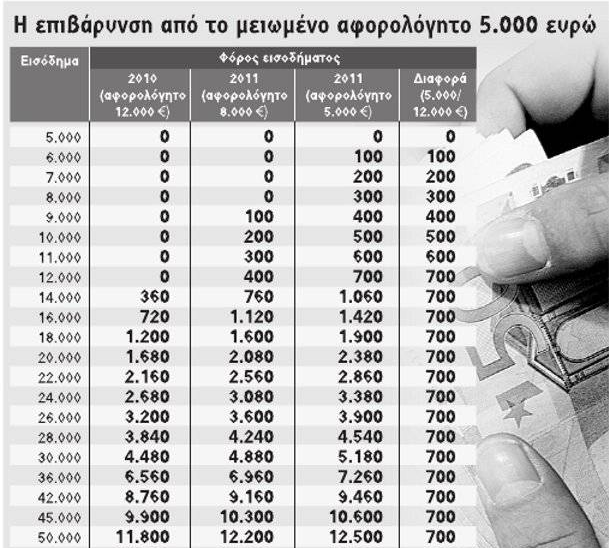
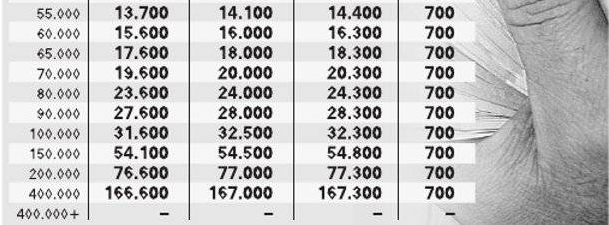
ΦΟΡΟ εισοδήματος ακόμη και για όσους ζουν κάτω από το όριο της φτώχειας (6.500 ευρώ, Eurostat) επιφύλαξε η κυβέρνηση, η οποία ρίχνει το αφορολόγητο στα 5.000 ευρώ, κόβει μισθούς και συντάξεις, στέλνει στην ανεργία αμέσως 30.000 δημοσίους υπαλλήλους του στενού και ευρύτερου δημόσιου τομέα μέσω της εργασιακής εφεδρείας, αυξάνει το φόρο στο πετρέλαιο θέρμανσης, που θα μας στοιχίζει 980 ευρώ τα 1.000 λίτρα από τον επόμενο μήνα, και επεκτείνει τον ειδικό φόρο στα ακίνητα μέχρι το 2014. Η τελική συμφωνία θα κλειστεί με την τρόικα την ερχόμενη εβδομάδα. Εντονη δυσαρέσκεια, αγωνία και προβληματισμός, όπως και απόψεις που φτάνουν μέχρι και σε σενάρια κυβέρνησης εθνικής ενότητας ή και πρόωρων εκλογών, υπάρχουν στο εσωτερικό της Κοινοβουλευτικής Ομάδας του ΠΑΣΟΚ, μετά το νέο σοκ των μέτρων.

Πλήρες θέμα…

(Ελευθεροτυπία, 22/09/2011)


Mια ματιά σε αυτό το γραφικό από το παραπάνω άρθρο της Ελευθεροτυπίας είναι παραπάνω από ενδεικτική σχετικά με τις προθέσεις των «ψαράδων». Τα υψηλά εισοδήματα δεν έχουν υπωστεί καμία αύξηση στην φορολογία, η οποία παραμένει χαμηλή (κάτω από το 25%). Και τι κάνουν; Μειώνουν το αφορολόγητο στα 5.000 ευρώ. Είναι σαν να πηγαίνεις για ψάρεμα, να πιάνεις ξιφίες και αθερίνα (για να μην πω κριλ και θεωρηθώ υπερβολικός), και να πας σπίτι σου για να ταίσεις την οικογένεια σου με την αθερίνα. Εν τω μεταξύ έχεις και φαλαινοκαρχαρίες σε αυτή την φανταστική θάλασσα, αλλά ούτε καν σκέφτεσαι να τους χρησιμοποιήσεις για τροφή. Αυτοί όχι μόνο θα έτρεφαν την οικογένεια σου για έναν μήνα, αλλά ολόκληρο το ψαροχώρι για τρεις.

Ίσως επειδή στην δική μας περίπτωση οι φαλαινοκαρχαρίες δεν είναι τόσο Μεγάλοι Φιλικοί Γίγαντες…

1. Μηνιαίος μισθός 6.100 ευρώ. 2. Σύνταξη μετά από 4 χρόνια βουλευτικής θητείας. Ποσό σύνταξης μηνιαίως 4.880 ευρώ. 3. Για συμμετοχή σε επιτροπές, 250 ευρώ την ώρα… 4. Οι βουλευτές της επαρχίας παίρνουν το μήνα 1.000 ευρώ για ενοίκιο. 5. Όλοι οι βουλευτές παίρνουν άπαξ 1.500 ευρώ για οργάνωση γραφείου και 1.000 ευρώ τις γιορτές λόγω αυξημένης επικοινωνίας με τους ψηφοφόρους τους. Το Δώρο Χριστουγέννων, Πάσχα και επίδομα αδείας είναι ξεχωριστά. … … 6. Δικαιούνται 104 αεροπορικά εισιτήρια ετησίως δωρεάν και απεριόριστες μετακινήσεις με ΟΣΕ και ΚΤΕΛ. 7. Πολυτελές αυτοκίνητο, δωρεάν καύσιμα με επίδομα 600 ευρώ το μήνα, ένα χωροφύλακα για φρουρό, 4 κινητά τηλέφωνα τελευταίας τεχνολογίας και ένα στο σπίτι, σταθερό, όλα δωρεάν. 8. Απολαμβάνουν πλήρους ασυλίας για όποιο αδίκημα διαπράξουν κατά τη διάρκεια της θητείας τους ως βουλευτές. 9. Δεν πληρώνουν φόρο για ένα μέρος του μισθού ή της συντάξεως. 10. Δικαιούνται γραμματειακή υποστήριξη για 4 υπαλλήλους και 1 επιστημονικό συνεργάτη. Όλους αυτούς τους πληρώνει το Δημόσιο. 11. Δικαιούνται άτοκα δάνεια ως βουλευτές και ως επαγγελματίες. 12. Δωρεάν γυμναστήριο, σάουνα, νηπιαγωγείο για τα παιδιά τους. 13. Τηλεφωνική ατέλεια. 14. Δωρεάν επισκέψεις σε αρχαιολογικούς και καλλιτεχνικούς χώρους. 15. Δωρεάν διόδια. 16. Δωρεάν εισιτήρια, ξενοδοχεία, γεύματα όταν ταξιδεύουν στο εξωτερικό ως μέλη επιτροπών κλπ…..ΟΙ ΑΜΟΙΒΕΣ ΤΟΥΣ ΤΗ ΣΤΙΓΜΗ ΠΟΥ ΟΙ ΠΟΛΙΤΕΣ ΣΤΕΡΟΥΝΤΑΙ ΤΑ ΒΑΣΙΚΑ …

English translation for my non-Greek speaking friends:
1. Monthly salary 6.100 euro. 2. Pension after 4 years of parliamentary service. Pension is 4.880 euros per month. 3. For participation in comitees, 250 euros per hour. 4. PMs from rural Greece receive 1.000 euros per month to pay their rent. 5. All PMs receive 1.500 euros to reorganise their office and 1.000 euros during holidays due to increased contact with their voters.Bonus salaries paid at Christmas, Easter and paid leave count separately… 6. PMs are entitled to 104 free air tickets per year, as well as unrestricted transportation by train and intercity bus. 7. Luxury car, free fuel paid for with 600 euros per month, bodyguard, four state-of-the-art mobile phones and a fixed one at home, all for free. 8. They enjoy full parliamentary sanctuary for any legal offense they commit during their work as PMs. 9. They do not pay tax for part of their salary or pension. 10. They are entitled to secretarial support for 4 employees and one scientific adviser. All paid by the state. 11. They can take out 0% interest loans, as PMs and as professionals. 12. Free gym, sauna, kindergarten for their children. 13. –no idea what this is, someone help!– 14. Free visits to archaeological sites and artistic venues. 15. Free tolls. 16. Free tickets, hotels, meals when travelling abroad as parts of delegations etc… THEIR INCOME, WHILE CITIZENS ARE LACKING THE BASICS…

Κι έτσι, οι αθερίνες εξαφανίστηκαν από αυτή την κατα τ’άλλα μαγική θάλασσα, και η τροφική αλυσίδα έσπασε. Κανείς δεν ξέρει τι απέγινε το ψαροχώρι. Κάποιοι λένε ότι ήρθε η πολυεθνική αλιευτική από την διπλανή πλούσια μεγαλούπολη, αυτό θα εξηγούσε τα ιχθυοτροφεία τα οποία βρίσκονται τώρα στο πρώην ψαροχώρι, αλλά κανείς δεν δίνει πολύ μεγάλη σημασία…


Downsides of Denmark

A Dane criticizes Denmark and the Danes. We gape at this apparent contradiction in terms and, when we’ve got over the shock, sit back and enjoy.

http://blogs.denmark.dk/peterandreas/

Just in time for this:

Faunts – “M4 (Part II)” music video

First found out about this song from the credits of Mass Effect, like most people that like it. Didn’t know there was a music video until yesterday. Great stuff.

Lyrics
I have wondered about you
Where will you be when this through
If all goes as planned
Will you redeem my life again?

Fire the fields the weed is sown
Water down your empty soul
Wake the sea of silent hope
Water down your empty soul

Fight your foes you’re on your own
Holy war is on the phone
Asking to please stay on hold
The bleeding loss of blood runs cold

And I need you to recover
Because I can’t make it on my own

Review: Anarchy and the End of History

Anarchy and the End of History
Anarchy and the End of History by Michael Ziesing

My rating: 3 of 5 stars

“Just when you thought it was safe to be a anarchist, Gunderloy and Ziesing are at it again, asking questions you thought you had answered, or maybe forgot to ask.
This anthology brings together a collection of essays by people who positively relish a good think – about anarchy, themselves, and so what difference does it make anyway?
More than a series of opinions, Gunderloy and Ziesing offer a dialogue among people who see their common ground as the greatest opportunity offering diversity, individualism and personal freedom.
Who are the anarchist? What, why and how are they in the world today? Maybe you’ll find some answers here. Maybe not. What you will find is an opportunity and a chakllenge to think about it!”

And make me think it did. This book could well be an 101 in Anarchy, but with all the advanced and meaningful debate that is going on about it in a completely different kind of depth, questioning at some points the very foundations of anarchy — see there? Anarchy is not something that is supposed to have “foundations”, yet we speak of it as a concrete idea, just like any other theory out there. You’ll encounter many such examples when reading this book if only because it includes texts by so many people. I wish I could find the original paper the replies to which comprise most of this book just so I could post it here and further spark debate myself. It was published in 1991, on the eve of the information age. 20 years later a highly anarchical World Wide Web is dominating our lives. You’d think a lot must have changed, surely it must have. You might be surprised.

I found this book completely randomly, in a second hand book sale in Aarhus and got it for only 5kr. It might be extremely hard to find, so if you’d like to read it I can lend it to you — yes, whoever you might be, dear reader (BookCrossing might also work well…) It’s a book I’d like to read again though, there’s just so much thought, references and a lot of optimistic ideas distilled in such a small number of pages.

View all my reviews

Review: Machine Man

Machine Man
Machine Man by Max Barry

My rating: 4 of 5 stars

This was the first audiobook I ever, uh, heard. It took me 9 hours of listening to Sean Runnette’s good narration over 3 days and it was a unique experience, just walking around while at the same time reading a book, or should I say, following a story. The added layer of voice and sound effects makes it more of a temporal experience than reading the book, with all the good and bad that fact might imply.

Machine Man tells the story of a thirty-something end-all be-all nerd, the kind of person that wanted to be a train when he was a child (yes, be one), loves describing the world with adjectives like “inefficient”, replies to everyting with an “OK” and manages to score zero at any social skills test thrown at him. Give this guy mad engineering skills and an amputated leg and sit back and watch (or read, or listen).

It was very engaging after the third or so chapter, I could see where this was going, but I’d need Z-specs to see how FAR it might go. The plot follows Charlie Newman’s addiction convincingly. I don’t like giving much away when writing my reviews, but I can’t help but applaud the side characters, they are particularly strong here; the ambitious but unappreciated Cassandra Cautery, Lola Shanks (Charlie’s prosthesiologist) and maybe my favourite character in the book, Carl.

Actually, the side characters are so strong they serve to underline Charlie’s single-dimensionality. So comparatively shallow is he that it’s easy to see him merely as the character carrying the plot’s central idea, its gimmick (I don’t like this word). This is perhaps the book’s single biggest problem for me, Charlie’s actions often seem unrealistic and his thoughts completely alien. I cringed all the time when he spoke, or at least when he attempted to. It’s no accident others — even his own self– compare him to a machine even from the start of the book. Are all labcoat-donning specialists so close-minded and awkward? If so, that might explain a lot about science in our world today.

I should however cut Charles Newman’s tormented existence a little slack. It might very well be that Max Barry wanted him to be so exaggeratedly awkward and obsessive-compulsive for comic relief (the book has many dark, uncomfortably funny moments), but also maybe to indirectly comment in his own way on the very foundation of the book’s premise: “biological vs mechanical”, “inefficient vs superior” and perhaps even “mind vs body”, the kind of dualist dilemma that is very natural to follow such what ifs as the one portrayed in Machine Man. What part of us is “us”, and what isn’t “us”? Is the brain more part of us than the rest of our body? Is it, then, that houses our consciousness? These questions are the delicious driving force of the plot and the thinking it provokes.

For example, in a part of the book, Charles says that when people achieve or pull off something (obviously –but exactly because of its obviousness, often overlooked– using their bodies), it’s we, as in our self, our consciousness, that achieved whatever it is that was achieved, the body shrinking into the tool used by the mind/brain it was and has always been, whereas in our failure or when an uncontrolable situation goes bad, we become disassociated with our bodies, they’re Others, and as all typical Others receive the blame for any problem. It reminds me of Heidegger’s take on how Dasein interact with things, the difference between ready-to-hand and present-at-hand. When our body works well, it’s ready-to-hand, it disappears in the background, too obvious to consider, only working as a tool. When it fails to serve us perfectly, its short-comings made obvious, it breaks, it becomes present-at-hand: welcome for optimization, as if it never belonged to us a tall. Machine Man gives food for many such enjoyable parallels.

In fact, Machine Man is one of the most sophisticated cultural items that deal with cyborgs I have encountered and had the pleasure to dive into. It’s definitely filled with all the appropriate nerdy scientific jargon that would satisfy any sci-fi fan (I wonder how many readers will find themselves identifying, even a little bit, with Charles!). But more interistingly, it goes beyond respecting the deep ontological problems that arise from the idea of cyborgs, prosthetics, implants and bio-enhancements, and their implications, if any, for (Cartesian) dualism. It uses these philosophical connotations and gives an interesting and believable story of what meddling with all this might bring about. In other words: it’s not as simple as it looks — it never is — but this time there’s a realistic, (super)human story behind it.

I almost forgot to mention that it has bits of horror and and it’s sprinkled with romance and action and a lot of suspense. You just keep reading, wondering if Max Barry will go all the way. He goes all the way… and then some.

~
I wonder when that had happened, that we had started making better machines than people.

View all my reviews

Relief

I was writing the review for Machine Man to appear shortly. And there were several powercuts. Yes, even Danish infrastructure can occasionally fail to cope with storms, apparently. I expected all I had written to disappear. But no, after I recovered my tabs from Firefox, there was my unfinished review, waiting for me. It whispered to my ear “it was so beautiful, the tunnel of light…” Thank you, Goodreads. You have acted in ways to prevent the unfortunate pain of a critical spirit. I wish more sites worked in ways as to prevent unecessary suffering in this already burdened world.

Danish Diaries #7

University classes have started (first lessons last week for Media Management & Journalism 3.0, I still haven’t had a class of Digital Media Ethics or Great Works of Art, although I had to listen to Monteverdi’s Vespro della Beate Vergine as preparation for the first class — listen to it if you like big band Baroque!) I’m meeting more and more people (and I thought the ~100 people of Destination DK was a lot; how about ~1500? That’s how many exchange students are here for the semester!), and, to be honest, the novelty is starting to wear off.

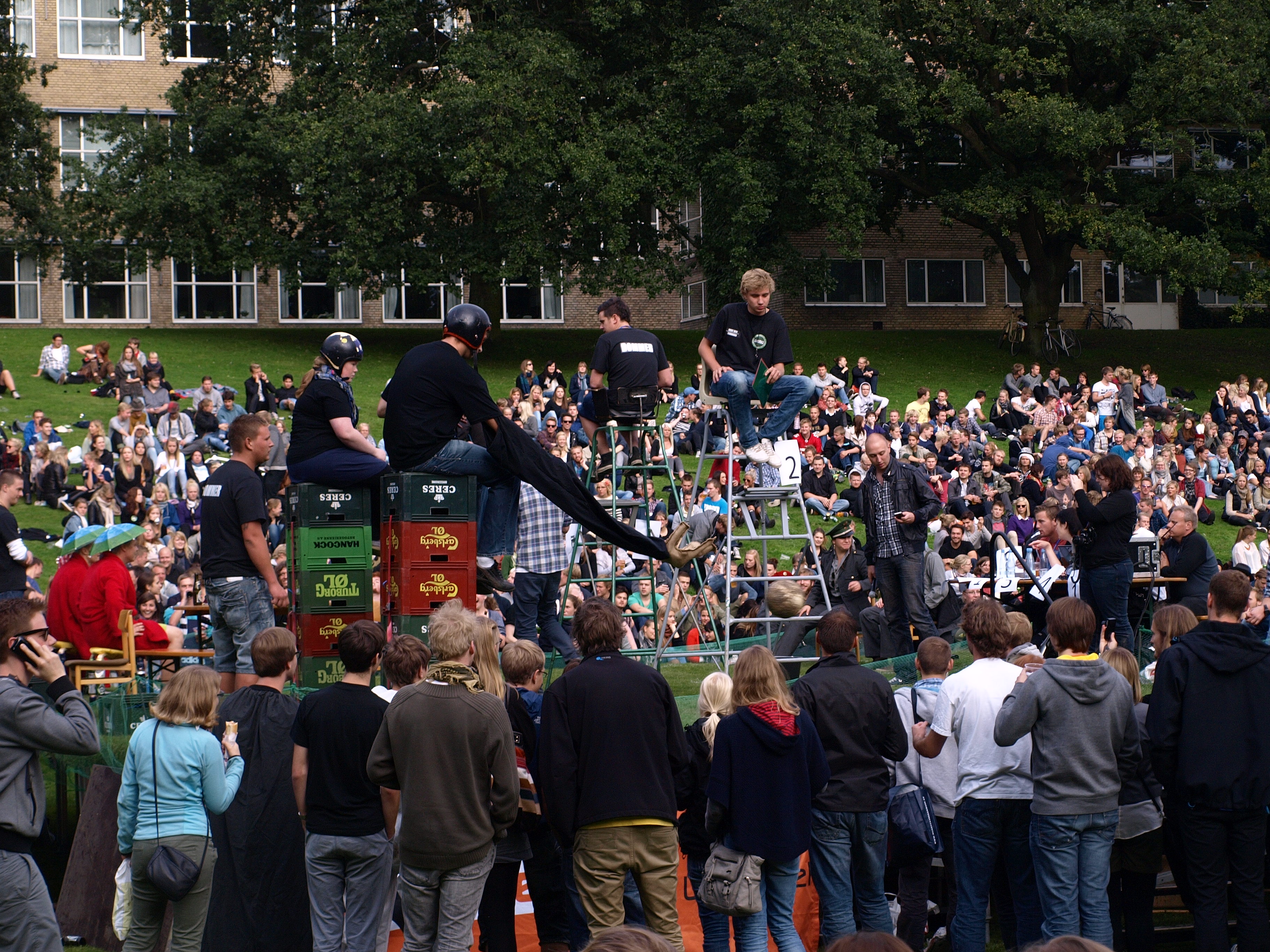
Just yesterday, it was “the biggest Friday bar of the year” (every department has its own Friday Bar which opens in the afternoons of, get that, Fridays, to accommodate thirsty and tired students from all of the week’s stress. Generally, just another excuse to chug beer and party.) So, yes, yesterday was the biggest Friday bar of the year. Close to the university park lake there was a stage on which there were teams playing Beer Bowling, with a large crowd surrounding the stage and loud club music blaring on the speakers. I found a lot of other exchange students around there but I wasn’t feeling like socialising under those conditions, it was too crowded and brainless and I could honestly see no fun in it. I mean, I’d like to play Beer Bowling with friends, but as a spectator sport?

Looks like fun. If you're Danish.

I’m trying to decide… What kind of fun do I like? On the one hand I really like quiet, personal, hyggelig situations with or without friends, watching a movie, discussing over good, just-cooked food — oh it feels so great cooking, I wonder why I wasn’t doing it all these years?! Thanks Ana and Cedric for helping with get in the hang of it! — playing a board game, subtle fun I don’t get very often these days except with very certain people. On the other hand, I can enjoy big parties and loud music, I like dancing (the alcohol percentage in my blood is inversely proportionate to my musical eclecticness, big surprise!) and I like meeting people, but yesterday I just wasn’t feeling up to it at all. Yes, there were even some girls that I wouldn’t mind talking to in there, some that I had met before and others that I wish I would, but just couldn’t. You know, I find it hard to just talk to strangers but even harder to talk to people I’ve exchanged a few words with already. I don’t know whether it’s shyness, indifference, dismissiveness or one of these masked as one of the other two

Anyway, I decided I wasn’t having any fun and just walked from the university park back home, mp3 player alternating between the audiobook I’m currently obsessed with and Primsleur Essential Spanish… Actually I do this quite a lot these days, walking from Skoldhøjkollegiet to Århus and back. It takes around an hour, it’s good exercise, I listen to audiobooks and my favourite music, it fills me with positive vibes and it’s free, unlike taking the bus! This is the optimal walking (and I also presume biking) route, my stride took only 59 minutes yesterday. τ^^ Rain will most definitely be a problem now that winter is coming, but eh, I’ll worry about that when winter is here.

Two weeks ago my Danish classes restarted, this time in a more serious environment. I have two lessons every week, Tuesday and Thursday afternoons. At the end of September I’m going to sit for my first test in Danish. If I succeed, I’ll  jump from complete-beginner Module 1 to almost-beginner Module 2. All I need to do to pass is speak about either a topic of my preference (I STILL DON’T KNOW WHAT I SHOULD CHOOSE TO BABBLE ON ABOUT! Greece? Food? Denmark? My hobbies? Aasfgfdlfkg?) or one of three books I’ll have to read beforehand. Oh, I had forgot the sensation of language exam stress! Missed you old chap.

I was in the mood to record some Danish for you tonight, maybe try to work on my pronounciation a little. I used a text I wrote almost a month ago for my Destination DK classes. My Danish is not much better today, but I can spot some mistakes I made back in August when I wrote this. I left them in for historicality.

Jeg hedder Dimitris Hall. Jeg kommer fra Grækenland, fra byen Nea Smyrni i Aten. Jeg er 22 år gammel. Jeg studerede kulturel teknologi og kommunikation til fem år på Ægæisk Universitetet, på øen af Lesvos. Min mor er græske og min far er australsk. De er sklit 20 år. Jeg har ingen søskende. Jeg bor i Århus to uger på Skoldhøjkollegiet og vil bor her i et halvt år. Jeg har mødet mange udvekslingsstuderende. Danmark er grøn med mange træer, skov og cykler. Desværre, jeg har ikke cykel nu, og jeg har ikke mange pengen. Men jeg finde Danmark og Århus hyggelig og jeg er glad at være her. Grækenland er ikke samme måde med Danmark. Grækenland er varm og ikke grøn, de har ikke mange penge der. Men Danmark og Grækenland har mange øer og jeg kan lidt øer og havet.

Translation:

My name is Dimitris Hall. I come from Greece, from the town of Nea Smyrni in Athens. I am 22 years old. I study Cultural Technology and Communication for five years at Aegean University, on the island of Lesvos. My mother is Greek and my father is Australian. They’re divorced 20 years. I have no siblings. I’ve lived in Aarhus for two weeks at Skjoldhøjkollegiet and will be living here for half a year. I have met many exchange students. Denmark is green with many trees, forests and bicycles. Unfortunately, I don’t have a bicycle now, and I haven’t got much money. But I find Denmark and Aarhus nice (cozy!) and I’m happy to be here. Greece is not the same as Denmark. Greece is warm and not green, they haven’t got much money there. But Denmark and Greece have many islands and I like islands and the sea.