EARWORM GARDEN // COLDPLAY — LIFE IN TECHNICOLOR II

Holy shit I’ve been looking for this for absolutely ages!

I would keep randomly coming across this tune, mainly by being near TVs, having it be my earworm for the day, and then miserably failing every time to get hold of a single clip long enough to effectively run through Shazam. I even wrote onERT on TWitter asking them to divulge their secrets, only to be completely ignored. Until I finally managed to scratch that itch today!

Once upon a time, people would have unresolved earworms and no way of identifying them, reproducing them and finding ways to relieve themselves, save humming and/or singing the words, describing the song, praying and hoping.

I suppose living in a world with public access to a great deal of the collected factual knowledge of our species, where it’s easy to find and listen to a song stuck in your head, as opposed to not, may be one of those relatively few things which is unequivocally good.

How impossible would this concept be to grasp, from start to finish, for a person living just 150 years ago, where no sound had ever been recorded yet and no music had ever been played, save from live musicians playing on real instruments.

For good measure:

REVIEW: PLUTO

PLUTO: Naoki Urasawa x Ozamu Tezuka, Band 001 (Pluto, #1)PLUTO: Naoki Urasawa x Ozamu Tezuka, Band 001 by Naoki Urasawa
My rating: 3 of 5 stars

This is a review for the whole series, not just Pluto #1.

I read it on my smartphone. What a time to be alive!

There’s this I’ve noticed with manga, anime and how I take them in: very often, such series as Pluto, or Neon Genesis Evangelion while we’re at it, they start off strong and interesting, they throw you in well-crafted worlds with characters I want to know more about. The art is captivating and undoubtedly masterful. By the end, however, the plot’s typically so messed up I find it difficult to keep caring. And that’s precisely what happened with me and Pluto. Should I give up on “serious” manga?

That said, I concede that Pluto portrays a society where artificial intelligence has penetrated human society quite convincingly. A killer robot that’s left its (his?) past life behind and just wants to play the piano? Now that’s something I want to read more about.

Also, what’s with Urasawa and Germany? Monster also took place there and it seemed kind of arbitrary that it had to.

View all my reviews

REVIEW: SAPIENS: A BRIEF HISTORY OF HUMANKIND

Sapiens: A Brief History of HumankindSapiens: A Brief History of Humankind by Yuval Noah Harari
My rating: 4 of 5 stars

Another good read I went through in audiobook format. The nature of the book made me feel as if was actually following a series of superb university lectures on our species as a whole instead of reading a book on the topic, which, incidentally and as the title states, is precisely the ambitiously broad, sweeping topic of Sapiens.

Mr. Harari’s choronicle of humanity is marked by the pivotal moments in human history, what we understand today to be its big turning points: the cognitive revolution, when our ancestors seemingly started to communicate about ideas and common myths and create art; the agricultural revolution, which brought private property in the picture, kickstarted civilization (life in the city) and effectively”caged in” our forefathers (more on that later on); the scientific revolution, which shifted our belief system to the result-oriented materialism of the scientific method, and the industrial revolution which has recently resulted in the fundamental shifts we are going through right now, the kind of changes that have made it possible for me to write this review and you to read it.

Fairly standard issue up to this point, right? What you’ll really find in Sapiens, though, is no ordinary retelling of our myths of history; the fact that one of the book’s central themes is that the agricultural revolution was actually “history’s biggest fraud” should give you an idea of what we’re dealing with here.

I’ll shamelessly quote The Guardian’s review of the book — where, by the way, I first found out about Sapiens through Mr. Harari’s article/promo for this book –also tellingly– titled Industrial farming is one of the worst crimes in history” (isn’t it?)

It’s a neat thought that “we did not domesticate wheat. It domesticated us.” There was, Harari says, “a Faustian bargain between humans and grains” in which our species “cast off its intimate symbiosis with nature and sprinted towards greed and alienation”. It was a bad bargain: “the agricultural revolution was history’s biggest fraud”. More often than not it brought a worse diet, longer hours of work, greater risk of starvation, crowded living conditions, greatly increased susceptibility to disease, new forms of insecurity and uglier forms of hierarchy. Harari thinks we may have been better off in the stone age, and he has powerful things to say about the wickedness of factory farming, concluding with one of his many superlatives: “modern industrial agriculture might well be the greatest crime in history”.

There are plenty of interesting ideas to write about off of Sapiens. You may read the rest of The Guardian’s review for the gist, because I feel there’s just too many of them to mention here. But there are three in particular that I found exceptionally intriguing:

1) What seemingly sets humans apart from our faunal brethren and sistren is our ability to create fictions and myths–anything from religion to ideology to stories–and group around them, team up around them, live for them, die for them.

2) Imperialism is a nasty word with virtually zero positive connotations today. However, If you look at human culture around the world, from language to cooking to music to politics to art, empires and imperial activity have been responsible for most of what we recognize as the common and not so common heritage we treasure so. How come I’m writing in English right now and you get to understand my thoughts expressed on this screen? Alexander the Great spread what’s deemed today as enlightened Greek culture in what was then the known barbarian world–by conquering, butchering and intermingling loads of different peoples, of course. Same for the Romans, British etc.

3) It follows from the above that if there is a single one-way trend in human history is that we’re moving one step at a time from separate communities to larger, more complex organisations to a single, planetary consciousness, and it’s not just the invention of global telecommunications that’s led us here.

Consider, for example, as Mr. Harari invites us to, that in most cases what we recognise as individual, uniquely national dishes and cuisines is what’s left of global empires of the past: Italy had no tomatoes, no pomodori, before the 16th century; chili isn’t at all native to India, and so on.

Sapiens is full of such insights that in my opinion more than deliver what is promised on the cover: a brief history of humankind. I can safely put it next to Christopher Lloyd’s What On Earth Happened or Bill Bryson’s  A Short History of Nearly Everything and add it to my core list of mind-expanding, impossibly broad works of non-fiction, and I wish I could mention everything I agree on with Mr. Harari in this review and his input I think is very significant.

The reason I’m giving Sapiens just four stars is that I find the book did not place too much emphasis on the way humanity is being detrimental to the health of its environment and planetary ecological balance (ancient sapiens killing off megafauna everywhere on the world nonwithstanding) and how this fact can and will mess everything up for us. Harari seems to envision as rather more possible a future where people as a species will become obsolete by emerging artificial intelligence or enhanced homo sapiens 2.0 godlike biotech creations that would be even more alien and incomprehensible to us than what we, the sapiens of today, would look like to people of the ancient world.

If any of this comes to pass, the greatest revolution yet is still ahead of us. But honestly, what’s most probably heading our way is somewhere between the technological dysutopia (no sp) imagined by the author and the ecocidal nightmare we’ve been moving into for a while. What’s interesting is that we’re going into this with an unprecedented feeling of unity: a global consciousness, as can be shown by the mere existence of Sapiens as a book, is reaching species. rather than national, racial or whatever, levels. Provided we stay alive for the show, it will all be incredibly exciting, not just impossibly depressing.

Wait a second: we’re already living it, aren’t we?

View all my reviews
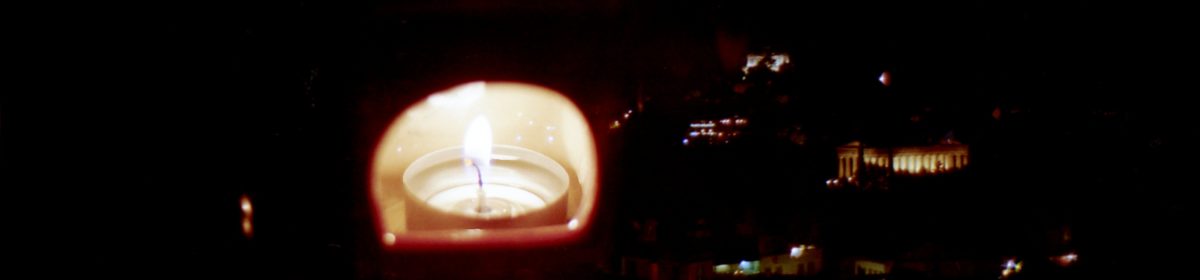
EARWORM GARDEN // GOAT – DET SOM ALDRIG FÖRÄNDRAS/DIARABI

Yesterday, after the continued insistence of various different people  I would not have in my mind otherwise associated with each other, I listened to Goat for the first time.

What was putting me off? My best understanding is that it must have been something in the band’s name–the only clue I’d been given–that made me believe their music would be dark and difficult to get into, the diametrically opposite genre to easy-listening, if you will (yeah, Steven Wilson is just sooo easy-listening!)

Further, it might have been my tainted inner workings, inevitably influenced by popular associations of poor caprids on the one hand with satans, plenty of blackness and a certain admiration of evil for roughly the same reason the dark side is generally considered to be cooler, and on the other with… I dunno, ridiculousness? Goats seem to be close to rivalling cats on the internet, only with twice the foolhardiness and much less than half the self-consciousness.

Anyway, turns out not only are Goat not dark or complex in that sense, their work is an absolute celebration of life and joy. No reverse psychology in this name, no irony, no references to darkness. Goat, plain and simple. Foolhardy, unconscious Goat.

I hope they play in Athens again soon.

PS: The more I listen to the climax, the more it reminds me of Festival by Sigur Rós.  And that’s good. Very good. Must be a Nordic thing.

REVIEW: SMOKE GETS IN YOUR EYES: AND OTHER LESSONS FROM THE CREMATORY

Smoke Gets in Your Eyes: And Other Lessons from the CrematorySmoke Gets in Your Eyes: And Other Lessons from the Crematory by Caitlin Doughty
My rating: 5 of 5 stars

I believe I first heard of this book on Mysterious Universe, if I’m not mistaken, and read it in audiobook format narrated by the author herself, which by the way is a medium of delivery which I believe is in fundamental and intuitive ways superior to the printed word. Having the author narrate her stories, thoughts and observations directly to you can create a powerful emotional connection, the non-verbal qualities of which should not be underestimated. The effect this one had on me was that of a profound book, which it is, but with the attributes of a captivating, paradigm-shifting motivational speech, TED talk or the like. I’ve had this experience before with The Power of Now and others that don’t readily spring to mind but are likely sitting somewhere on my audiobook shelf.

What makes this book special? Well, all I can say is that listening to what Ms. Doughty had to say about death and “our” relationship with it really made me think. We don’t cremate people in Greece, nor do we embalm them, but the fear of death is still something that governs most people and our lives to a degree we’re too scared to even consider. The way we treat our elderly and rob them from the right to a “good death” is definitely something we have in common in many globalised cultures. At some point, she said something close to “in 19th century Britain, nudity or sex was taboo; today, in what we consider our free-minded and progressive society, it is death is the greatest taboo of all.”

I’m writing this review from an internet cafe in Ioannina and I’m running out of time, so keep this: if you want to have your attitude towards death in general questioned and think deeply about the ailments of our necrophobic society, don’t miss Smoke Gets in Your Eyes. The writing was captivating, too; it took me just 4 days to finish.

View all my reviews

LINK: GOOGLE’S DEEPMIND DEFEATS LEGENDARY GO PLAYER IN HISTORIC VICTORY

LINK

Video is from another significant Google victory against a puro earlier this year. When AI can defeat the best humans at the game “given to us by the Gods”, there are only few more steps to be taken before the AI becomes God itself.

Hey, I made an allusion to The Last Question without intending to from the start. Yay for me!

Biased as I am from reading Conversations with God Book 3 and incapable to, or perhaps unwilling, to understand God in any other way apart from as it was described by the books’ author Neale Donald Walsh, I’ll go down saying that the introduction of a godlike AI doesn’t necessarily mean that said AI would be fearsome and/or awe-inspiring: a godlike AI could reflect God  in the same way people are gods, that is by being creators, especially of their own life and experience. AI could “just” become another life form trying to figure itself out and its place and purpose in the universe. The world would move on.

Relevant reddit posts: /r/futurology and /r/worldnews (for comparison’s sake)


LINK: WE LIVE IN A FUTURE WHERE OUR ATTENTION IS CHEAPLY SOLD

Intelligent article (qz.com) about how the switch from scarcity of knowledge to the scarcity of attention that has occurred since we all became connected through the internet means that the new global currency has become our attention, a resource corporations and advertising firms are currently feasting on. In fact,

Limitless access to knowledge brings limitless opportunity—but only to those who learn to manage the new currency: their attention. In the new economy, the most valuable asset you can accumulate may not be money, may not be wealth, may not even be knowledge, but rather, the ability to control your own attention, and to focus.

Because until you are able to limit your attention, until you are able to turn away, at will, from all of the shiny things and nipple slips—until you are able to consciously choose what has value to you and what does not, you and I and everyone else will continue to be served up garbage indefinitely. And it will not get better, it will get worse.

See also: FATE OF THE INTERNET

EARWORM GARDEN // STEVEN WILSON — 3 YEARS OLDER

Another Steven Wilson song from Hand. Cannot. Erase. that’s playing in my head. I played this one in my car a few days ago to friendly company and they seemed to agree that it wasn’t the right time to play it and that they “didn’t go crazy for Steven Wilson”. Something twitched inside of me as I blurted back something between “I didn’t expect you to” and “my car, my rules”, which I immediately regretted. It’s okay, though, because playing that song then and there was what made it become my new earworm of the week and what eventually led to this post.

3 years ago was my first day at my first youth exchange, I See Green at Olde Vechte. Sofia gave me a little cupcake with a candle on it after that first lunch in Zeesse. I felt far away from home, celebrating my birthday in the company of strangers, but that gesture warmed my heart.

Today, 3 years older, there’s little hope the strangers in the army camp will become the special people the strangers from that youth exchange in the Netherlands soon became. But the candle from back then is still burning. It’s one of those special trick candles that don’t go out when you blow them.

PS: Wilson’s coming to Athens on May 5th. You can tell I won’t let many things stop me from being there to see him play.

EARWORM GARDEN // FLIGHT OF THE CONCHORDS — INNER CITY PRESSURE

1. Finally, some music that speaks of the real problems in life!
2. Flight of the Conchords are an actual band that existed before the series did! I never knew!
3. Have you actually watched the series? It’s just the most brilliantly funny show I’ve watched this side of Spaced.
4. Nice cover art.
5. It just came back to me: I recall driving back from… Nafplio, wasn’t it, with Daphne. We had En Lefko on (right?) and suddenly this started playing. We had watched the episode mere days before. Quite a moment of joy, there. Actually, in retrospect, I should have figured out then and there that they were an actual band…